Tvareet

Custom Freight Forwarding Software Development for Forwarders Who Have Outgrown Off-the-Shelf

From FCL and LCL quoting through multi-modal booking, customs documentation, shipment tracking, and client billing — we engineer freight forwarding platforms purpose-built for your cargo types, trade lanes, compliance requirements, and the client reporting standards your accounts actually demand.

Trusted by Global Enterprises

KFC
KPMG
Google
Domino's
Boston Consulting Group
Americana
KFC
KPMG
Google
Domino's
Boston Consulting Group
Americana

What We Build Into Your Custom Freight Forwarding Software

Every module engineered around the workflows freight forwarders actually run — from first quote to final invoice — not the simplified version of freight forwarding that generic platforms were designed for.

Shipment Quoting & Rate Management

Multi-modal rate engine covering FCL, LCL, air freight, and road — with carrier tariff management, surcharge logic, fuel levies, port fees, and automated quote generation across multiple carriers simultaneously. Core to freight management and TMS rate engines.

FCL · LCL · Air · Multi-modal · Automated Quoting · Tariff Management

Shipment Booking & Order Management

End-to-end booking workflows from customer purchase order through carrier booking confirmation — covering space booking, equipment ordering, booking amendment management, and multi-leg shipment coordination across all freight modes.

Space Booking · Equipment Orders · Multi-leg Coordination · Booking Amendments

Bill of Lading & Documentation Management

Automated generation of house bills of lading, master bills of lading, sea waybills, air waybills, and cargo manifests — with document version control, amendment workflows, original release management, and electronic bill of lading capability.

HBL · MBL · Air Waybill · Manifest · Electronic BL · Document Control

Customs Declaration & Compliance

Customs entry preparation workflows covering import and export declarations, tariff classification management, duty and tax calculation, preferential origin documentation, prohibited goods screening, and direct connectivity to customs authority systems.

Import & Export Declarations · Tariff Classification · Duty Calculation · Customs Connectivity

Shipment Tracking & Visibility

End-to-end shipment visibility from origin booking through port departure, transit, port arrival, customs clearance, and final delivery — with automated milestone updates, exception alerting, and client-facing tracking portal access. Integrates with supply chain visibility and logistics platforms.

Milestone Tracking · Exception Alerts · Port Visibility · Client Tracking Portal

LCL Consolidation & Deconsolidation

Consolidation management covering cargo booking into LCL consols, container utilisation optimisation, cargo cut-off management, manifest generation, and deconsolidation workflows at destination — with profit and loss visibility per consol.

Consol Management · Cargo Cut-offs · Container Utilisation · P&L per Consol

Carrier & Agent Network Management

Centralised carrier and overseas agent management covering rate agreements, service level tracking, performance scorecards, commission and disbursement management, and agent portal access for shipment status updates and document exchange. Aligns with TMS carrier management and logistics operations.

Carrier Rates · Agent Portals · Performance Scorecards · Commission Management

Freight Cost Management & Disbursements

Automated cost capture across all freight legs — origin charges, ocean or air freight, destination charges, customs duties, and disbursements — with actual versus estimated cost variance reporting and carrier invoice matching against agreed rates.

Cost Capture · Actual vs Estimate · Carrier Invoice Matching · Disbursement Management

Client Invoicing & Accounts Receivable

Automated invoice generation from job cost data covering multi-currency invoicing, freight charge itemisation, duty and tax pass-through, credit note management, and direct integration with Xero, MYOB, SAP, and Oracle for accounts receivable synchronisation. Connects to supply chain and e-commerce order flows where required.

Multi-currency Invoicing · Duty Pass-through · Credit Notes · Xero · MYOB · SAP

Dangerous Goods & Specialist Cargo Management

Dangerous goods compliance workflows covering IMDG, IATA DGR, and ADR classifications, DG declaration generation, packaging group verification, segregation rule enforcement, and specialist cargo handling for temperature-sensitive, oversized, and high-value freight. For regulated cargo see our healthcare and pharma logistics experience.

IMDG · IATA DGR · DG Declarations · Temperature Sensitive · Oversized Cargo

Client Portal & Self-Service Visibility

Branded client portals giving importers and exporters real-time shipment visibility, document access, booking request submission, invoice history, and customs entry status — reducing the volume of status calls and email threads your operations team handles daily.

Real-time Visibility · Document Access · Booking Requests · Invoice History

Reporting, Analytics & Business Intelligence

Configurable operational and financial reporting covering shipment volumes by trade lane and cargo type, revenue and margin per client and lane, carrier performance, customs compliance metrics, and agent network profitability — with BI and analytics integration for executive reporting.

Trade Lane Analytics · Revenue per Client · Carrier Performance · BI Integration

Freight Forwarding Software Built for Your Cargo, Your Trade Lanes, and Your Market

A perishables forwarder and a project cargo specialist both move freight — but they need completely different software. We build freight forwarding platforms engineered around the specific cargo types, compliance requirements, and trade lane complexity of your operation.
FCL and LCL ocean freight operations demand software that handles the full carrier booking cycle, container tracking across multiple legs, bill of lading management, freight release workflows, and port-to-port visibility without manual status chasing. We build ocean freight platforms covering space booking across carrier networks, automated HBL and MBL generation, telex release and electronic BL management, demurrage and detention tracking, and container event milestone visibility from origin booking to destination delivery.
FCL
LCL
HBL
MBL
Telex Release
Demurrage Tracking
Container Visibility

The Technology Stack Behind Every Freight Forwarding Platform We Build

Freight forwarding software handles some of the most complex data relationships in enterprise logistics — a single shipment touching carrier APIs, customs authority systems, port community systems, banking platforms for document release, and client ERP integrations simultaneously. Every technology decision we make is driven by one requirement: does it handle that complexity reliably, at the transaction volumes your freight operation generates, without becoming a maintenance burden your IT team inherits.

Mobile Frontend

High-performance, driver-first mobile applications built for reliability and real-time use.

Flutter
React Native
Swift (iOS)
Kotlin (Android)

Why Freight Forwarders Choose Tvareet to Build Their Platform

Freight forwarding software is the most integration-intensive platform in logistics. Carrier APIs, customs authority connectivity, port community systems, banking platforms, agent networks, and client ERPs — all touching a single shipment simultaneously. We have built in this environment before. You are not our first freight forwarding project.
01

Freight Forwarding Domain Expertise — Not General Logistics Knowledge

We understand the difference between a telex release and an express release, why per-consol P&L matters to an NVOCC, and what a customs broker needs from a tariff database integration that a standard ERP developer has never encountered. Domain expertise that eliminates the learning curve from your project timeline. The same depth we bring to freight management and TMS development.

Freight forwarding specialists. Not general logistics developers.

02

End-to-End Platform Thinking — Quote to Invoice

We engineer freight forwarding platforms as a connected system — rate management feeding quoting, quoting feeding booking, booking feeding documentation, documentation feeding customs, customs feeding tracking, tracking feeding invoicing. No data silos between modules. No manual reconciliation between steps. Aligned with how supply chain and logistics platforms should be built.

Connected platform. Quote to invoice. Zero manual reconciliation.

03

Customs & Compliance Built In — Not Bolted On

Customs declaration workflows, tariff classification, duty calculation, FTA preference management, and customs authority connectivity are engineered into the platform architecture from Phase 02 — not added as a third-party integration after the core platform is built. Compliance is an operational workflow, not a reporting module.

Customs authority connectivity. Tariff integration. FTA management. Built in from day one.

04

Carrier & Agent EDI Connectivity — Scoped Before Development Begins

Every carrier EDI integration, agent portal connection, and port community system interface is scoped and architecturally designed in Phase 02 before development starts. Integration complexity that derails other freight software projects is a planned deliverable on ours — not a mid-build discovery.

EDI X12 · EDIFACT · Carrier APIs · Agent Portals. Scoped upfront. No mid-build surprises.

05

Multi-Currency, Multi-Entity Financial Architecture

Freight forwarding financial flows are complex — multi-currency invoicing, intercompany transactions between agent networks, disbursement management, duty and tax pass-through, and credit management across client portfolios. We build the financial architecture to handle this complexity natively — not through manual workarounds in your accounting system. Integrates with e-commerce and ERP invoicing where required.

Multi-currency · Multi-entity · Disbursements · Duty Pass-through · Credit Management

06

Migration Experience — CargoWise, Magaya & Legacy Systems

Migrating historical shipment data, rate tables, client records, and financial history from CargoWise, Magaya, or legacy on-premise freight systems requires freight data expertise that general development agencies do not have. We have managed freight platform migrations and understand the data models, the mapping complexity, and the parallel run requirements that a clean migration demands.

CargoWise migration · Magaya migration · Legacy system data migration · Parallel run management

07

Post-Launch Support From Engineers Who Know Freight

Named post-launch engineering support from the team that built your platform — not a generic support desk encountering freight forwarding workflows for the first time. Production SLAs, continuous monitoring, and an ongoing development retainer from engineers who understand your cargo types, trade lanes, and compliance requirements as well as your codebase. The same approach we use for logistics and supply chain platform support.

Named engineering support · Production SLAs · Freight-domain post-launch team

Our Work Speaks
For Itself

Explore how we've transformed businesses with cutting-edge technology and design-led engineering.

Healthcare Automation

Nagalikar Diagnostic

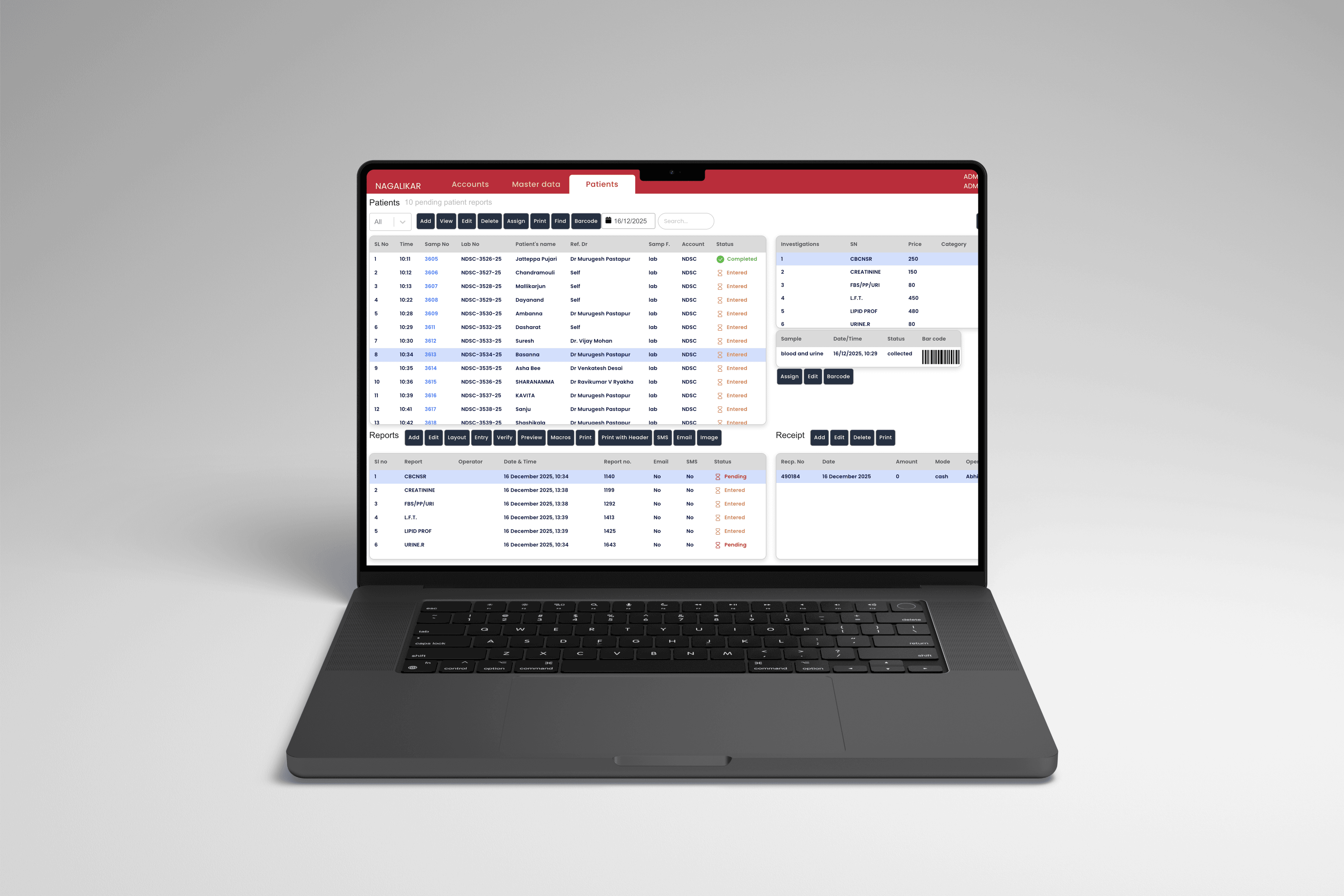
A fully automated diagnostic center management system integrating Beckman Coulter & Siemens analyzers directly with the cloud. Reduced report turnaround time by 60% and achieved zero manual errors.
150+
Daily Patients
0%
Error Rate
3x
Efficiency
View Case Study
Nagalikar Diagnostic
EdTech Platform

Physics Factor

A comprehensive learning ecosystem with 10,000+ students. Features real-time assessments, analytics, and interactive video lectures. Built to handle high concurrency with 99.9% uptime.

10k+
Students
95%
Engagement
99.9%
Uptime
View Case Study
Physics Factor
E-commerce & Customization

Printila

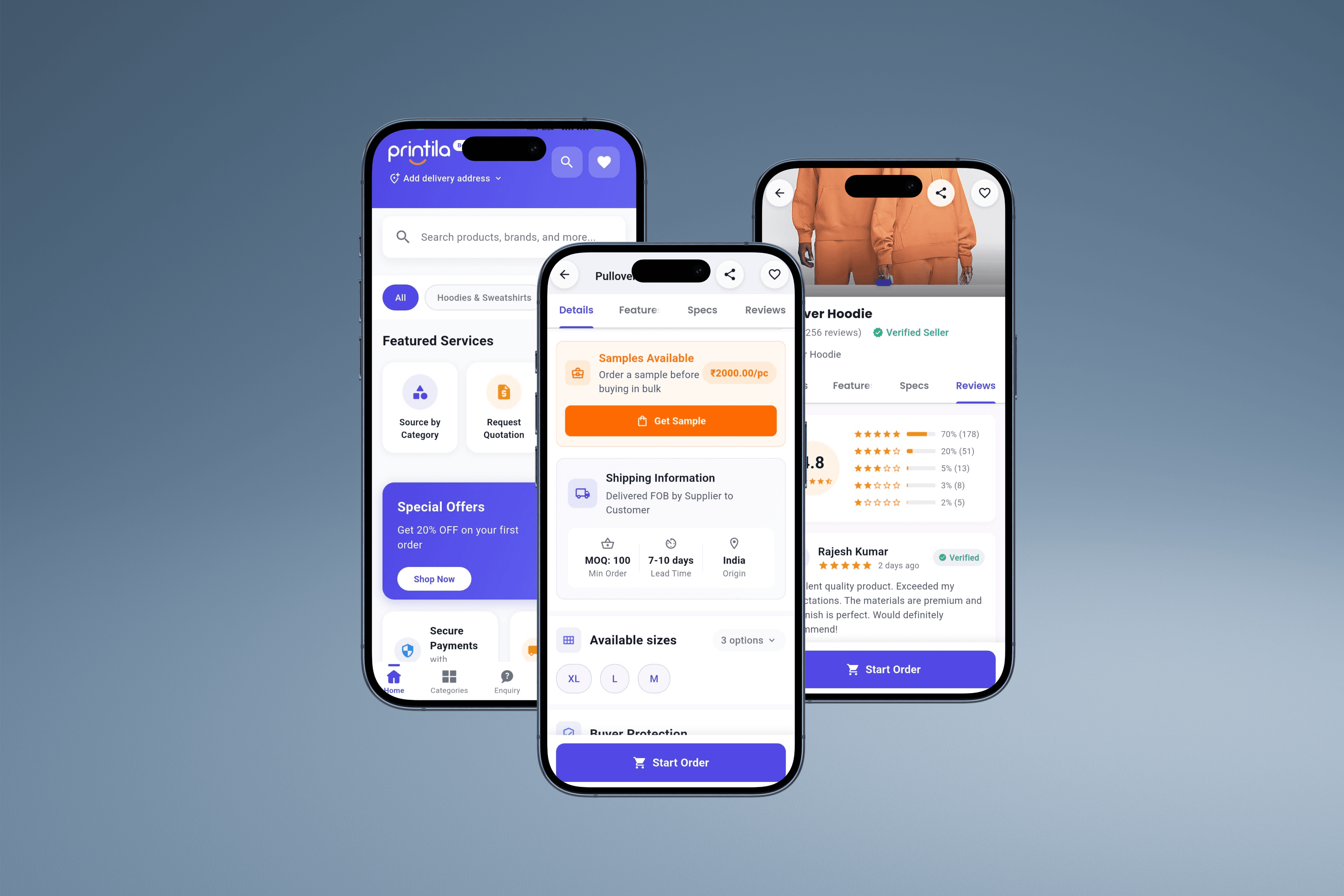
A custom merchandise platform with a powerful real-time product designer. Streamlined vendor management and order processing, boosting operational efficiency by 50%.
+50%
Efficiency
Fast
Processing
Premium
User Exp
View Case Study
Printila

How We Build Your Custom Freight Forwarding Platform

From first brief to live shipments — every phase designed to handle the integration complexity, compliance requirements, and data migration challenges that make freight forwarding software projects uniquely demanding.
Phase 01Weeks 1–3

Phase 01 — Freight Operations Discovery

We map your complete forwarding operation — cargo types, trade lanes, modes, carrier and agent network, customs workflows, client reporting requirements, and every system your new platform needs to connect to or replace. Output is a fixed scope, fixed price, and phased delivery roadmap before development begins.
Phase 02Weeks 3–5

Phase 02 — Architecture & Integration Design

Complete technical architecture designed before a line of code is written — platform data model, customs authority connectivity, carrier EDI integration architecture, agent portal design, multi-currency financial layer, and infrastructure scaling plan. Every integration scoped and mapped upfront so complexity is a planned deliverable, not a mid-build discovery.
Phase 03Weeks 4–7

Phase 03 — UI/UX Design & Workflow Validation

Interactive prototypes built for every user role — operations staff, customs team, finance, management, and client portal users — validated by your forwarding team before development begins. Workflow gaps in a freight forwarding platform caught in design cost hours. In development they cost weeks.
Phase 04Weeks 6–22

Phase 04 — Core Platform Development

Development runs in two-week sprints with working software at the end of every cycle. Core forwarding modules built first — shipment management, rate engine, documentation, and the primary integration layer — so highest-value functionality is live and tested earliest. Staging environment accessible from sprint one.
Phase 05Weeks 14–24

Phase 05 — Integrations, Customs Connectivity & Data Migration

Every integration built and validated against live data — carrier EDI connections, customs authority lodgement, port community system interfaces, agent portal connectivity, accounting platform integration, and banking platform connections for electronic BL release. Historical shipment data, rate tables, client records, and financial history migrated and reconciled from your existing platform.
Phase 06Weeks 20–28

Phase 06 — Testing, Compliance Validation & UAT

Functional testing across every forwarding workflow. Compliance validation against customs authority requirements — declarations tested against real tariff classifications, duty calculations verified, DG screening logic validated against current IMDG and IATA DGR classifications. Role-specific UAT with your operations, customs, and finance teams working through real shipment scenarios.
Phase 07Weeks 28–32

Phase 07 — Go-Live & Parallel Run Management

Freight forwarding platforms go live with a structured parallel run period — old and new systems operating simultaneously while your team validates live shipment data, declaration accuracy, and financial reconciliation against your source system before the legacy platform is decommissioned. Go-live is not a hard cutover. It is a managed transition.
Phase 08Week 32 onwards

Phase 08 — Hypercare & Ongoing Development

Four-week hypercare with named engineering support and agreed production SLAs — covering your first peak shipment period, first customs audit cycle, and first end-of-month financial close on the new platform. Ongoing development retainer for new trade lanes, cargo types, carrier integrations, and platform scaling as your forwarding operation grows.
Client Success Stories

"The automation system significantly reduced our report turnaround time. The direct integration with our analyzers meant zero manual errors and happier patients."

Dr. Anand Nagalikar

Director, Nagalikar Diagnostic Center

"The scalable ecosystem Tvareet built allowed us to handle thousands of concurrent students without a single glitch. Their understanding of EdTech is profound."

Satyam Kumar

Founder, Physics Factor

"The operational efficiency we gained with Tvareet's platform is unmatched. We cut down manual work by half and can now scale confidently."

Pravin Kumar

Founder, Printila

Ready to Optimize Your Final Mile?

Book a free 60-minute strategy session with our logistics tech and AI experts.

Phone

FAQs

Straight answers to the questions freight forwarders, NVOCCs, and customs brokers ask before committing to a custom freight forwarding platform build.

Custom freight forwarding software development typically ranges from $50,000 for a focused MVP covering core shipment management, documentation, and basic carrier connectivity to $200,000+ for a full-featured forwarding platform covering multi-modal operations, customs authority integration, LCL consolidation management, multi-currency invoicing, agent portal connectivity, and comprehensive ERP integration. The primary cost drivers are the number of freight modes covered, customs authority integration complexity, the number of carrier and agent EDI connections required, whether data migration from an existing platform is in scope, and the number of distinct user roles requiring separate interfaces. We provide a fixed-price estimate after a structured discovery session — no open-ended billing.
A focused MVP covering core forwarding workflows — shipment management, documentation, basic carrier connectivity, and client tracking — typically takes 18–24 weeks. A full-featured platform covering multi-modal operations, customs authority connectivity, LCL consolidation, agent network management, multi-currency invoicing, and data migration from an existing system runs 30–36 weeks. The most common cause of timeline extension in freight forwarding projects is customs authority integration complexity and data migration scope that was not fully assessed before development began. Both are documented and priced in Phase 01 and Phase 02 before any development starts.
Yes — data migration from CargoWise, Magaya, and legacy on-premise freight forwarding systems is something we handle as a structured phase of every relevant project. This covers historical shipment records, rate tables, client and agent records, financial history, and customs entry data — extracted, transformed, validated, and loaded into the new platform with reconciliation against your source system before go-live. We manage a parallel run period where both systems operate simultaneously so your team can validate live shipment data, declaration accuracy, and financial reconciliation before the legacy platform is decommissioned. Migration is not a hard cutover — it is a managed transition with zero data loss.
Yes — customs authority connectivity is a core component of freight forwarding platforms we build, not an afterthought. We integrate with the Australian Border Force (ABF) and ACBPS systems for Australian customs declarations, UAE Federal Customs Authority systems for GCC market operations, HMRC CDS for UK import and export declarations, and other customs authority APIs where your trade lanes require it. Integration covers automated import and export entry preparation, tariff classification database connectivity, duty and tax calculation, FTA preference management, prohibited goods screening, and declaration lodgement — with declaration status tracking and compliance audit trail management built into the operational workflow.
Yes — dangerous goods compliance is a specialist capability we build into freight forwarding platforms for forwarders handling DG cargo. This covers IMDG classification management for ocean freight, IATA DGR compliance for air freight, and ADR for road freight — including UN number verification, packaging group assignment, segregation rule enforcement across multi-commodity consignments, DG declaration generation, emergency response documentation, and carrier DG acceptance workflow management. DG screening logic is validated against current classification databases before go-live and updated as classification changes are issued by IMDG, IATA, and ADR authorities.
Yes — LCL consolidation and NVOCC operations are a distinct capability we build for forwarders running their own consolidation services. This covers consol creation and cargo booking management, dynamic space allocation across multiple trade lanes, cargo cut-off management, automated manifest generation, MBL and HBL linking, destination deconsolidation workflows, and per-consol profit and loss reporting. The consolidation module is built with the financial visibility NVOCCs need — actual versus estimated cost per consol, agent commission management, and container utilisation reporting — giving your consolidation team the data to manage profitability at the consol level rather than the shipment level.
We build carrier connectivity through EDI X12 and EDIFACT transaction sets for ocean carriers — covering booking requests, booking confirmations, bill of lading instructions, shipment status messages, and freight invoice processing. For air freight we build airline API connectivity for space booking and AWB generation. For road and multimodal we build carrier API and EDI connections specific to your carrier network. Agent network connectivity is built through dedicated agent portals — giving your overseas agents direct access to shipment status, document upload, job acceptance, and disbursement management within the platform. Every carrier and agent integration is scoped and architecturally designed in Phase 02 before development begins. See also our TMS and freight management integration experience.
Yes — multi-currency financial management is a core architectural requirement in every freight forwarding platform we build. This covers multi-currency client invoicing with real-time exchange rate integration, disbursement management in local currencies, duty and tax pass-through to clients, intercompany transaction management between agent networks, credit limit management per client, and accounts receivable synchronisation with Xero, MYOB, SAP, and Oracle. Currency conversion logic is built at the transaction level — not applied as a blanket rate at month end — so your financial reporting reflects actual currency movements across every shipment. Integrates with supply chain and e-commerce order and invoice flows where required.
CargoWise and Magaya are strong platforms for freight forwarders whose operations align with the workflows they were designed for. CargoWise in particular is the market-leading platform for large forwarders managing standard multi-modal operations with extensive carrier network connectivity already built in. Custom development makes more sense when your operation handles specialist cargo types or trade lanes that no available platform covers cleanly, when your per-user licensing cost on a commercial platform is approaching the cost of a one-time custom build over a 3–5 year horizon, when your client reporting requirements cannot be met by the platform's standard reporting tools, or when your competitive advantage depends on forwarding processes that need to be protected in proprietary software. We give you an honest build-versus-buy assessment in every discovery session — including whether CargoWise or Magaya is genuinely the better choice for where your operation is today.
Yes — multi-office and agent network management is a standard architectural requirement for freight forwarding platforms we build. This covers office-level user access controls and data segregation, intercompany job and cost sharing between offices, agent portal access for overseas partners, agent performance scorecards, commission and disbursement management across the agent network, and consolidated reporting across all offices and agents from a single management view. For forwarders operating across multiple countries, we build jurisdiction-specific compliance workflows, local currency handling, and country-specific customs authority connectivity into the same unified platform — so your global operation runs from one system without compromising local compliance requirements.
The client portal gives your importer and exporter clients self-service access to their shipments without requiring a phone call or email to your operations team. This covers real-time shipment tracking with milestone visibility from booking to delivery, document access for bills of lading, commercial invoices, packing lists, and customs entries, booking request submission directly into your operations workflow, invoice history and outstanding balance visibility, and customs entry status tracking for clients managing their own import compliance. The portal is branded to your freight forwarding business — your logo, your colours, your domain — not a generic platform that makes your clients feel like they are accessing a third-party system rather than your own.
Yes — perishables and cold chain forwarding is a specialist capability we build for forwarders handling temperature-sensitive cargo. This covers temperature-controlled space booking with carrier cold chain confirmation, phytosanitary and health certificate documentation workflows, cold chain monitoring integration with IoT temperature devices, shelf-life-aware routing logic that factors transit time against cargo shelf life, automated health authority documentation for biosecurity requirements, and pre-cooling and post-arrival temperature excursion alerting. Documentation workflows for perishables — phytosanitary certificates, health certificates, certificates of origin for FTA preference, and fumigation certificates — are generated automatically from shipment data rather than assembled manually per consignment. For pharma cold chain see our healthcare logistics experience.
Because you own the codebase, adding new trade lanes, cargo types, carrier integrations, or compliance workflows is entirely within your control — not dependent on a vendor's product roadmap or feature request queue. New capabilities are added through the ongoing development retainer by the same engineering team that built the platform. Adding a new trade lane typically involves carrier EDI or API integration for the relevant carrier network, customs authority connectivity for the destination market, and any cargo-type-specific documentation or compliance workflows. These are scoped as individual development items with clear cost and timeline estimates — not open-ended projects.
Yes — we have delivered logistics and freight software for clients across Australia, the UAE, and the UK, and we understand the specific regulatory and operational requirements that distinguish each market. For Australia this means ABF and ACBPS customs connectivity, Australian carrier and stevedore EDI standards, Chain of Responsibility compliance where applicable, and Xero and MYOB accounting integration. For UAE this means UAE Federal Customs Authority connectivity, GCC market trade compliance, and multi-currency management for AED, USD, and regional currency flows. For UK this means HMRC CDS integration for post-Brexit customs declarations, UK carrier EDI standards, and VAT handling for cross-border trade flows. Multi-market freight forwarding platforms are designed with each market's compliance requirements built in from Phase 01 — not retrofitted after the primary market version is complete.
Post-launch support covers a structured four-week hypercare period with named engineering support, agreed SLA response times for critical and high-priority production issues, and weekly review calls covering system health, declaration accuracy, and user feedback. Hypercare covers your first peak shipment period, first customs audit cycle, and first end-of-month financial close on the new platform — the three operational events most likely to surface issues in the weeks after go-live. After hypercare we transition to an ongoing development retainer covering bug fixes, performance optimisation, new carrier integrations, new trade lane additions, and platform scaling as your forwarding operation grows. The engineering team that built your platform stays involved — you are not handed to a support desk that has never processed a bill of lading. The same approach we use for supply chain and logistics platform support.