
Custom TMS Software Development for Modern Logistics Operations
Replace spreadsheets, disconnected tools, and rigid off-the-shelf software with a Transportation Management System built around the way your business actually operates.
Your logistics work is stuck in spreadsheets and disconnected apps
Most logistics businesses do not operate the same way. Dispatch rules, pricing, documents, and customer updates are unique to each fleet — but generic transportation software still expects everyone to follow the same process.
So teams patch the gaps with Excel, email, WhatsApp, accounting tools, GPS platforms, and paper. Loads live in one place. Driver updates live in another. Billing waits on documents that never arrive on time. That is the same friction we see across trucking software and dispatch software builds.
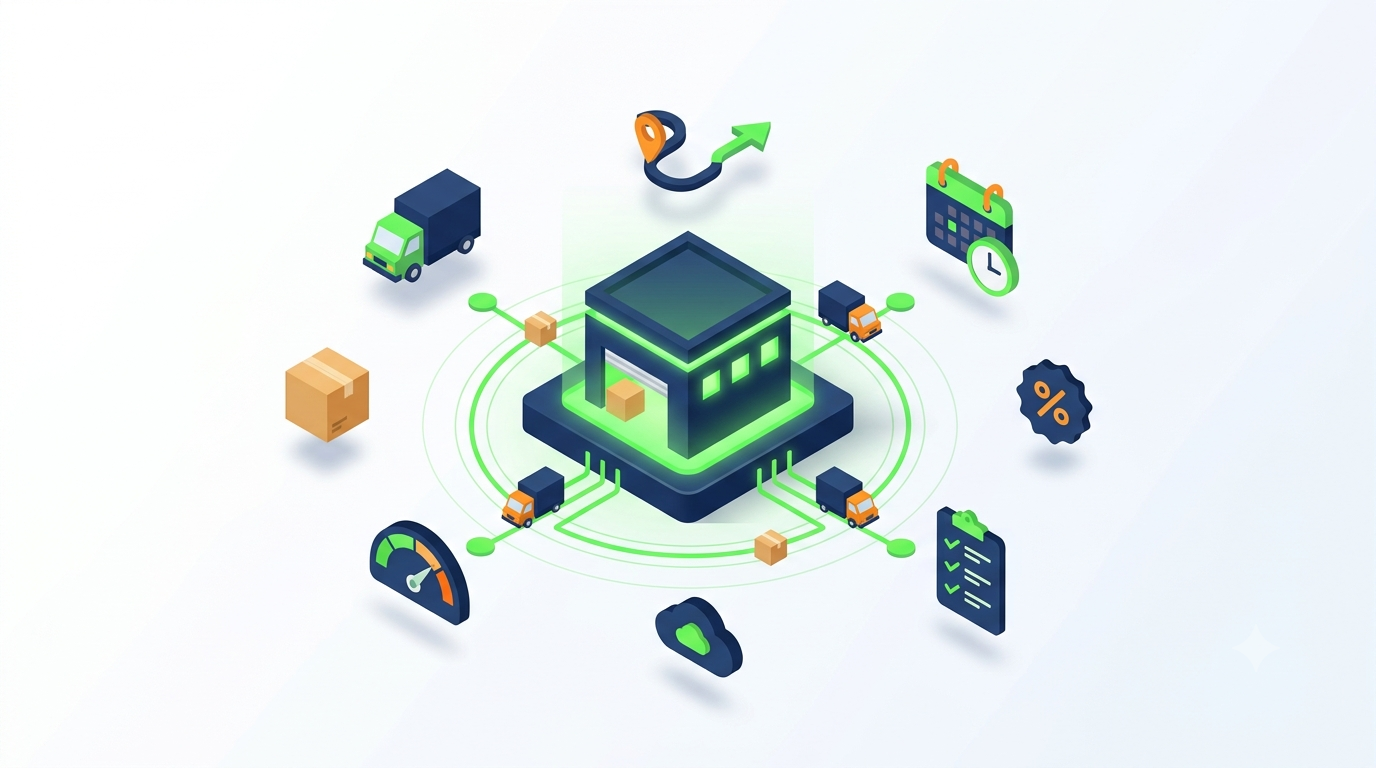
A custom TMS puts dispatch, loads, drivers, tracking, documents, and billing in one platform designed around how your operation already works — instead of forcing your team to adapt to a product built for thousands of other companies.
That usually means connecting the systems you already use, adding a driver app when the road team needs one, and linking fleet, GPS, or accounting tools where the APIs allow. The result is one workflow from load creation to delivery, not five disconnected ones.
$2K
Starting custom TMS development
10–14 wks
Typical focused MVP timeline
You own it
Source code after final payment
8+
Logistics integrations where APIs allow
Samsara
Motive
Geotab
WEX
Built around how you dispatch today.
Discuss Your TMS RequirementsWhy custom
Build a TMS around how your team already works
Off-the-shelf TMS software is built for everyone, so it rarely fits one operation well. Custom software follows your loads, drivers, pricing, and documents.

With custom transportation management software, dispatch software, and driver app development, you keep the workflow your team already knows — and connect the tools around it instead of replacing everything.
Built for Your Workflow
Dispatch rules, pricing, documents, roles, and approvals stay the way your team already works.
Connect Existing Systems
Link GPS, ELD, accounting, fuel cards, and maps where those platforms provide an API.
Grow Without Replacing It
Add modules, users, trucks, locations, and customers as the operation expands.
You Own the Platform
The software follows your business — not a SaaS vendor's roadmap or per-truck licence.
What we build
Everything Your Transportation Operation Needs in One Platform
A custom TMS can include dispatch, loads, drivers, tracking, documents, billing and reporting — built around the workflows your team already runs, rather than forcing those workflows into a generic product.

Built around how you actually dispatch
From the dispatch board to PODs and invoicing, we engineer the modules your team needs and leave out the ones they don't.
Get a ConsultationCreate loads, assign drivers and vehicles, manage pickup and delivery schedules, and monitor every shipment from one dispatch dashboard.
ExploreReady to run dispatch from one TMS?
Let's build transportation software around your loads, drivers, and documents — instead of stretching your team across spreadsheets, emails, and generic tools.
Discuss Your TMS Requirements
End-to-end workflow
From Load Creation to Final Invoice
Automate the complete transportation lifecycle while keeping dispatchers, drivers, customers, and management connected in real time.
- 01Load Created
- 02Driver & Truck Assigned
- 03Driver Receives Job
- 04Pickup
- 05Live GPS Tracking
- 06Delivery
- 07POD Uploaded
- 08Invoice Generated
- 09Customer Receives Documents
- 01Load Created
- 02Driver & Truck Assigned
- 03Driver Receives Job
- 04Pickup
- 05Live GPS Tracking
- 06Delivery
- 07POD Uploaded
- 08Invoice Generated
- 09Customer Receives Documents
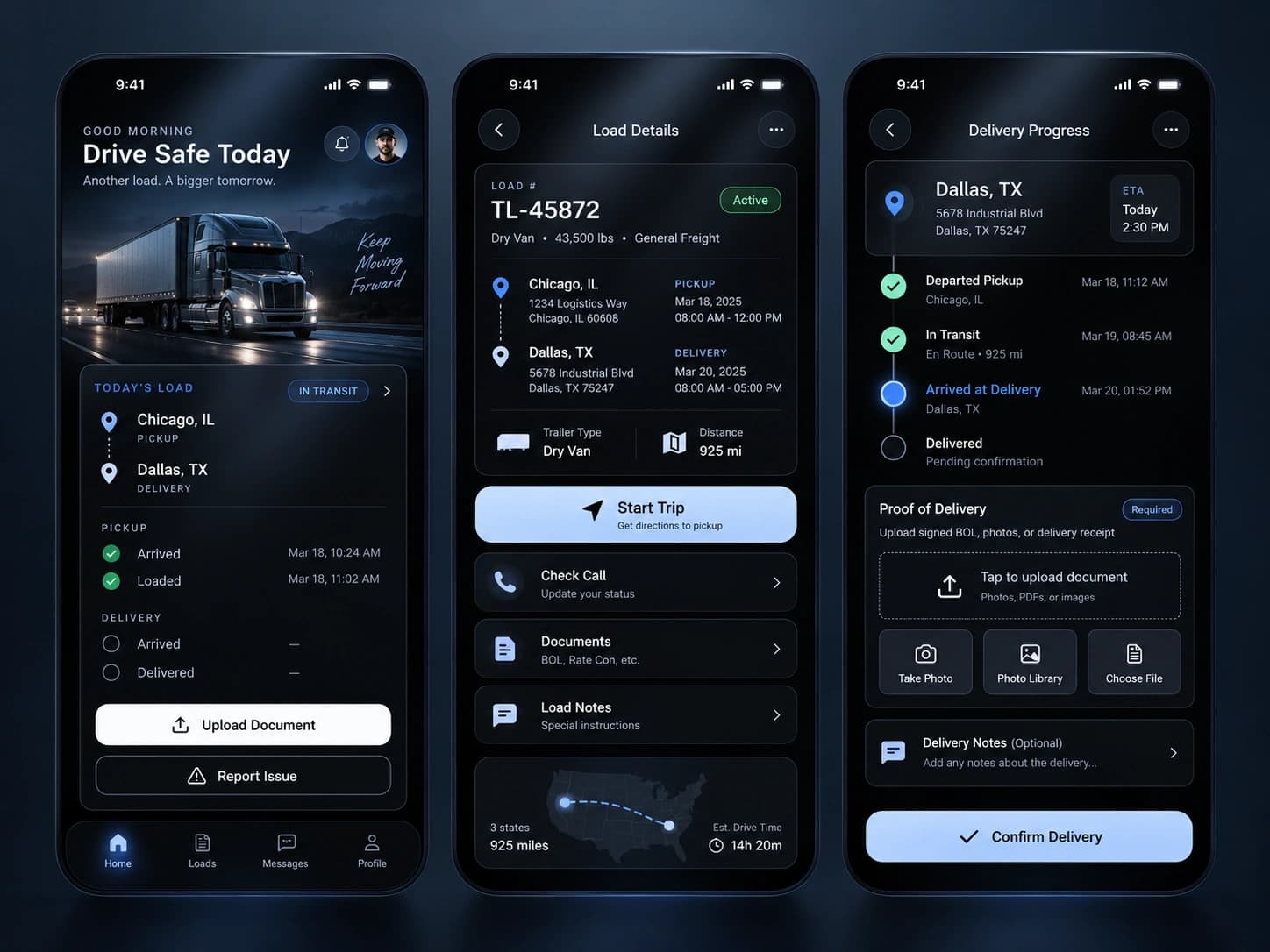
Give drivers one app for loads, status, and PODs
Dispatchers shouldn't chase every update by call or text. A driver app connected to your TMS puts assignments, documents, and delivery proof on the phone — then sends them back to the back office automatically.
- Load assignments
- Route details
- Status updates
- POD & BOL uploads
- Photos & signatures
- Maintenance reporting
- Push notifications
- Two-way messaging
These workflows can be built into the driver app, cross-platform for iOS and Android.
Integrations
Connect GPS, fuel cards, and accounting to your TMS
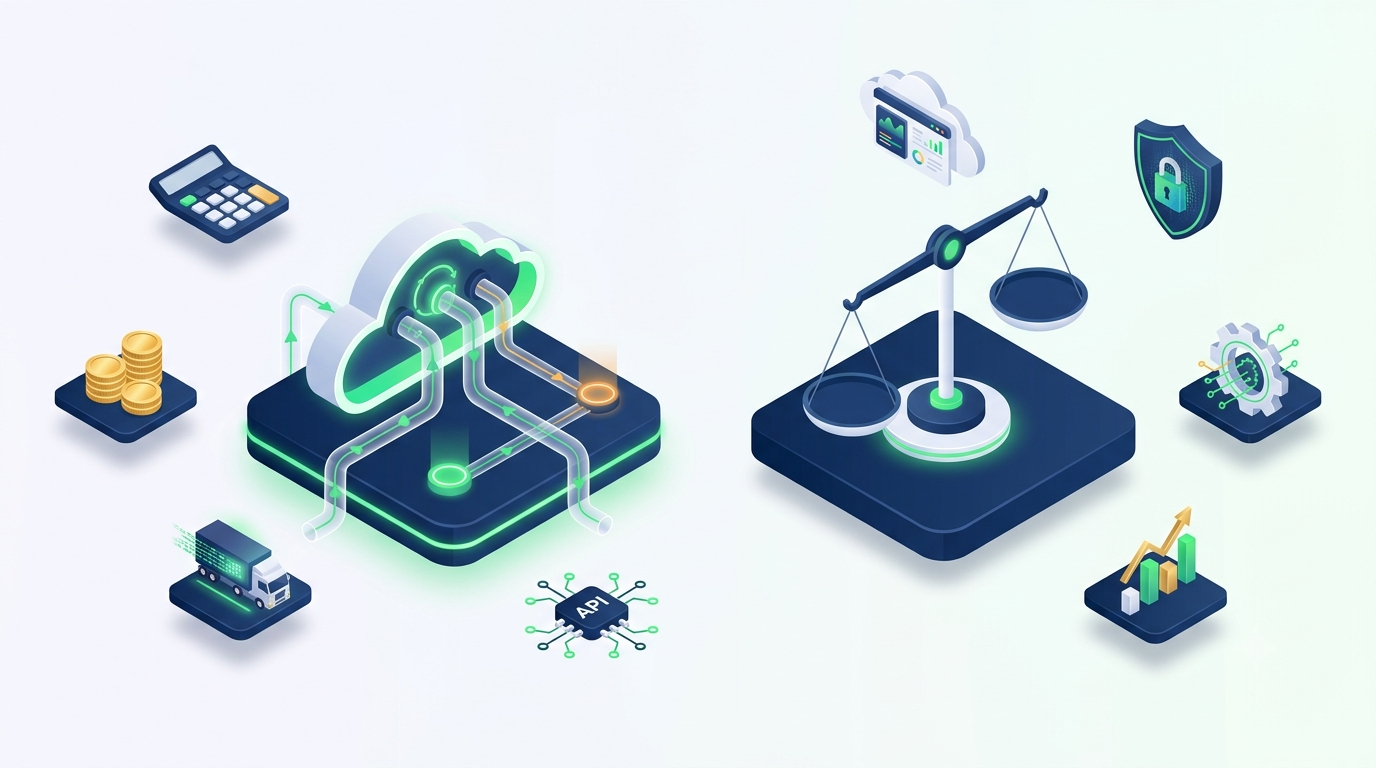
Keep the tools U.S. fleets already run — Samsara, Motive, WEX, QuickBooks, and others — and connect them to your TMS where those providers give API access.
Telematics & GPS
Bring vehicle location, mileage and supported telematics data into dispatch and reporting. U.S. fleets often use Samsara, Motive, Geotab or Omnitracs — we evaluate each based on API access and permissions.
Fuel cards
Import fuel transactions and connect them with trucks, drivers, trips and reporting. Common U.S. fuel-card platforms include WEX, EFS and Comdata, evaluated on their APIs and data access.
Accounting
Synchronize customers, invoices, payments and financial data between your TMS and U.S. accounting tools such as QuickBooks Online, Xero or Sage, where those platforms expose an API.
Maps & routing
Integrate mapping, geocoding, mileage, routing and ETA using Google Maps, PC*Miler, Trimble MAPS, Mapbox or HERE — whichever API your lanes and compliance rules need.
Payments
Connect payment providers such as Stripe with customer portals, booking flows or transportation billing workflows.
ELD
Connect ELD data used by U.S. carriers — including Samsara, Motive and other FMCSA-registered devices — into driver, dispatch and HOS workflows where the provider API allows.
Custom APIs
If another platform exposes an API or webhook, we can evaluate how it can be connected to your TMS rather than replacing the systems that already work.
Don't see your software?
Tell us which systems you use. If they expose an API, we can evaluate connecting them to your TMS.
Who we build TMS software for
Custom TMS platforms for trucking companies, brokers, 3PLs, courier fleets, and specialized carriers — built around how each operation actually moves freight.
Trucking Companies
Dispatch, trucks, trailers, drivers, loads, maintenance, fuel, and billing in one operational platform — the same scope we cover in custom trucking software.
Freight Brokers & 3PLs
Shipment management, carrier assignment, customer portals, pricing, and documentation — without forcing a one-size-fits-all TMS onto a brokerage or 3PL workflow.
Courier & Same-Day Delivery
Job allocation, route planning, pricing, proof of delivery, and customer tracking for local and last-mile delivery operations.
Dedicated Fleets
Fleet scheduling, maintenance, driver management, and reporting for private and dedicated fleets — including fleet management software when vehicles and service history sit alongside dispatch.
Specialized Transportation
Workflows for refrigerated, heavy haul, automotive, construction materials, and other operations that don't fit a generic dry-van TMS.
Show us how you dispatch today. We'll map it to a custom TMS.
Let's discuss your requirementsPut loads, drivers, and billing in one TMS
Show us how you dispatch today. We'll scope a platform around your workflow — not a generic product your team has to work around.
Discuss Your TMS Requirements$2K
starting custom TMS development
10–14 wks
typical focused MVP timeline
You own it
source code after final payment
The stack we use to build your TMS
We pick the architecture around your scale, integrations, and security needs — typically React, Next.js, React Native, Node.js, PostgreSQL, and AWS. U.S. logistics tools such as Samsara, Motive, Geotab, WEX, and QuickBooks are connected where those providers give API access.

HTML

CSS

JavaScript

React

Next.js
How we build your custom TMS
Six phases from your current dispatch process to a working platform — with demos at every stage so you always know where the build stands.
Discovery
We start by mapping how loads, dispatch, drivers, customers, documents, billing, and reporting work today. That includes the spreadsheets, calls, and tools your team actually uses — not a generic TMS template.
Planning & Architecture
We define modules, roles, workflows, and integrations before code starts. GPS, fuel cards, accounting, and ELD connections are scoped around the APIs those providers actually give you.
UI/UX Design
Dispatchers, managers, and drivers review the screens first. Gaps in the load board, assignment flow, or POD capture get caught in design instead of after launch.
Development
We build the TMS module by module — dispatch, driver app, documents, billing — with regular demos. You see working software throughout, not a reveal at the end. Start with a discovery call if you want that plan in writing first.
Testing & Launch
We test against real loads, driver updates, document uploads, and exception cases before go-live. Then we help your team switch over without freezing operations.
Ongoing Development
After launch we can add modules, users, locations, and integrations as the fleet grows — the same platform, not a replacement cycle.
Show Us How You Currently Run Your Operation
Whether you're using spreadsheets, an existing TMS, or several disconnected systems, show us your current workflow. We'll help identify what should be automated, what should stay as-is, and what a custom platform could look like.
No obligation. We can start with your current workflow and requirements.
Frequently Asked Questions About Custom TMS Development
Cost, timelines, integrations, phased delivery, driver apps, customer portals, and ownership.


Ready to talk about your TMS?
Show us how you dispatch today. We'll map a platform around your loads, drivers, and documents — not a generic product your team has to work around.
Discuss your TMS requirements