
Your cardiology practice just invested $340,000 in a patient engagement app. Three weeks before launch, your development partner admits they can't execute a Business Associate Agreement. Your legal team halts deployment. Six months of work evaporates because the vendor never architected Protected Health Information workflows correctly.
This scenario plays out across 200+ healthcare organizations annually, according to breach settlement data from the U.S. Department of Health and Human Services. The average cost isn't just the sunk development budget—it's the $2.3 million median HIPAA violation penalty, the 18-month audit cycle, and the patient trust you'll spend years rebuilding.
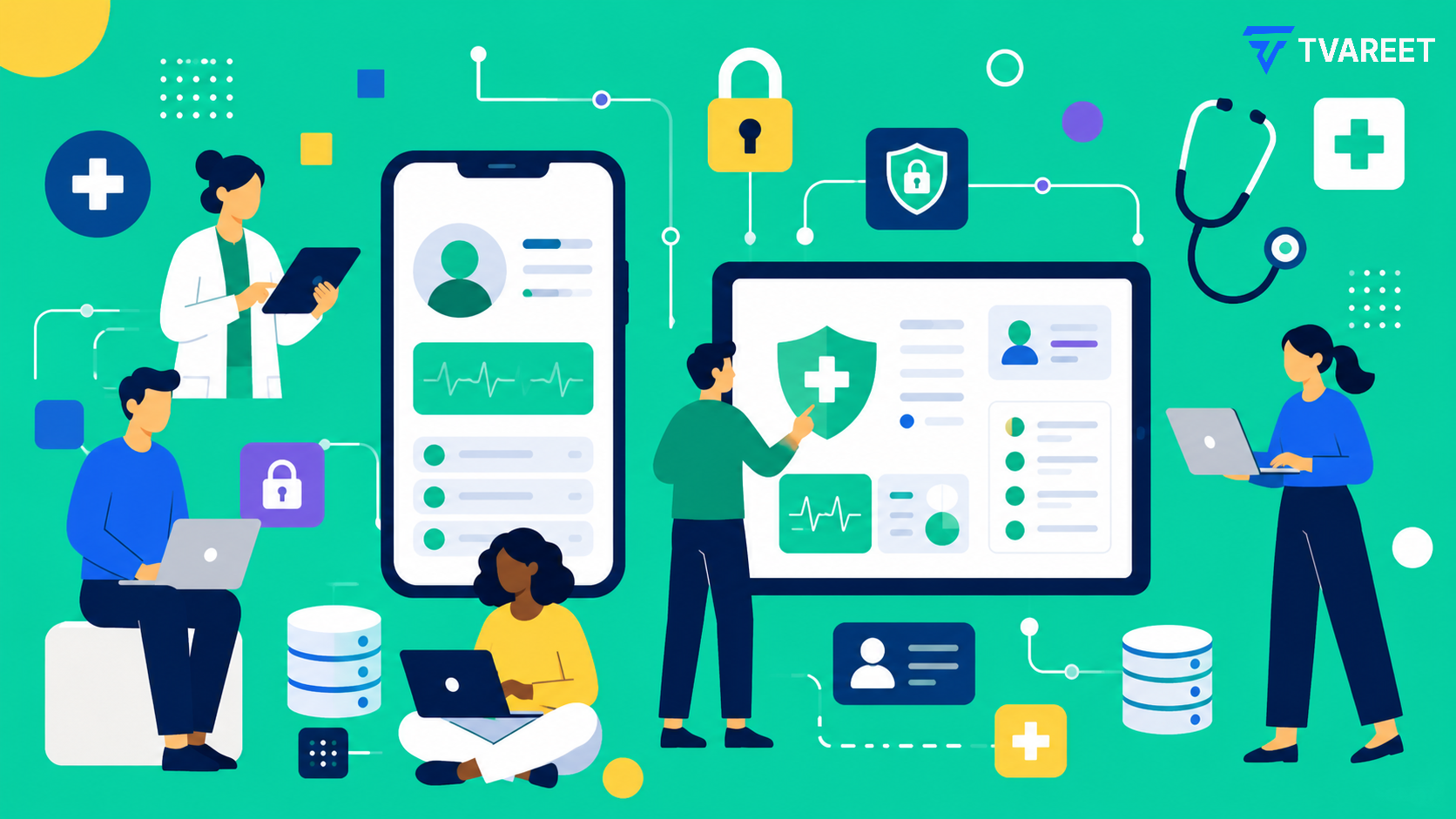
HIPAA compliant app development isn't a checkbox feature you bolt onto existing code. It's a foundational architecture decision that shapes every database query, API call, and user authentication flow from day one. When healthcare executives ask us why compliant platforms cost 40-60% more than consumer apps, the answer lies in what happens behind the login screen.
Why Standard Development Frameworks Fail Healthcare Compliance
Most enterprise software follows a velocity-first philosophy: ship fast, iterate based on user feedback, patch security gaps in sprints. That model works for e-commerce and SaaS tools. It creates catastrophic liability in healthcare.
The difference comes down to how systems handle Protected Health Information (PHI). A typical patient portal touches 14-22 data points classified as PHI—from appointment timestamps to medication dosages. Every touchpoint requires encryption at rest and in transit, role-based access controls that survive staff turnover, and audit logs detailed enough to reconstruct who viewed which record at 3:47 PM on a Tuesday in 2019.
We recently consulted for a regional hospital network running patient scheduling through a custom app built by a generalist firm. The system worked beautifully for 18 months. Then their compliance officer discovered the database logged full patient names alongside appointment reasons in plain text—a textbook HIPAA violation. The remediation project cost $480,000 and required migrating 340,000 records while maintaining uptime for 12 clinic locations.
The technical failure wasn't malicious. The original developers simply didn't architect data models around HIPAA's minimum necessary standard. They treated patient names like any other string field instead of implementing field-level encryption with cryptographic key rotation.
The Business Associate Agreement Bottleneck Nobody Discusses
Here's the counter-intuitive reality about HIPAA app development company partnerships: the Business Associate Agreement matters more than the code itself in the first 90 days.
Your business associate agreement is a legally binding contract that makes your development partner jointly liable for PHI protection. Most software agencies refuse to sign them because the risk profile doesn't match their insurance coverage. The firms that do sign BAAs restructure their entire project workflow—from developer background checks to server access policies to breach notification procedures.
This creates a qualification gap. You can't evaluate a development partner's true compliance capability until you see their BAA terms. Yet most healthcare buyers don't request the agreement until contracting, weeks after selecting a vendor based on portfolio work and cost estimates.
We recommend flipping that sequence. Ask potential development partners to provide their standard BAA template in the RFP response. The document reveals whether they:
Maintain cyber liability insurance that explicitly covers PHI breaches
Conduct annual HIPAA training for every engineer touching your project
Use dedicated infrastructure with healthcare-specific access controls
Have documented incident response plans with 60-minute breach notification windows
A vendor hesitating to share their BAA early signals they're planning to treat your healthcare app like a standard software project. That misalignment costs you six months when their legal team balks at signing during contract negotiations.
Architecture Patterns That Pass OCR Audits
The Office for Civil Rights doesn't publish a certified technology stack for HIPAA compliance. They audit whether your technical controls match the risk profile of the PHI you handle. That ambiguity paralyzes many development teams.
In practice, compliant architecture clusters around four non-negotiable patterns:
Encrypted data transmission across every endpoint. This means TLS 1.2 or higher for web traffic, but also encrypted mobile app storage, encrypted database connections, and encrypted backup channels. We've seen apps fail audits because their analytics SDK transmitted usage data unencrypted—even though the SDK never touched PHI directly.
Granular access controls tied to workforce roles, not individuals. Your system must restrict a front desk coordinator to scheduling functions while blocking access to clinical notes, even if that coordinator temporarily covers for a nurse. Most off-the-shelf authentication libraries don't support this level of role hierarchy out of the box.
Tamper-evident audit logging with 6-year retention. Every time someone views, modifies, or deletes a record, your system must log who did it, when, what changed, and from which device. The logs themselves must be encrypted and stored separately from production databases to prevent administrators from covering tracks.
Automatic session timeouts and device-level authentication. A clinician opening your app on a tablet in a patient room can't leave it unlocked when called to an emergency. Your interface must enforce timeouts, require re-authentication for sensitive actions, and optionally support biometric locks.
These patterns sound straightforward until you layer them onto a real feature like appointment reminders. A simple SMS notification triggers a cascade of compliance questions: Does the message content include PHI? How do you authenticate the recipient's phone number? What if the patient shares a phone with a family member? Can they opt out without calling your office?

One of our chronic care management clients needed a medication adherence app for diabetes patients. Their clinical team wanted push notifications reminding patients to check blood sugar levels. Standard mobile development would implement that feature in a few hours using Firebase Cloud Messaging.
The compliant version required three weeks. We had to architect a notification queue that anonymized patient identifiers, implement two-factor phone number verification during onboarding, build a patient-controlled notification preference center, and create audit logs tracking which messages were sent, delivered, and opened. The feature worked identically from the patient's perspective, but the underlying infrastructure protected against a dozen breach scenarios.
When to Hire Specialists vs. Training Generalist Teams
Most healthcare organizations face a build-versus-buy-versus-partner decision when they need compliant software. Your internal IT team knows your workflows intimately but may lack HIPAA development experience. Offshore generalist firms offer attractive pricing but rarely maintain BAA-capable infrastructure. Specialized hire HIPAA compliant app developers agencies cost more but deliver audit-ready platforms.
The decision tree comes down to risk tolerance and timeline.
If you're building a patient-facing app that will touch more than 5,000 records annually, specialist partners reduce your breach exposure significantly. A single violation can cost 10x the premium you'd pay for experienced developers. If you're creating an internal tool for a small practice with limited PHI exposure, training your existing team may make financial sense—assuming you budget for compliance consulting during architecture and pre-launch audits.
We've guided clients through both paths. A multi-state behavioral health network hired us to build their telehealth platform because their 18-month launch window couldn't absorb a compliance learning curve. A regional orthopedic group trained their internal developers to add HIPAA-compliant messaging to an existing EHR integration, since the feature only touched scheduling data, not clinical records.
The hybrid approach works for many organizations: hire specialists to architect the core compliance framework, then transition maintenance and feature development to trained internal teams once the foundation is solid.
Integration Architecture for Epic, Cerner, and Athenahealth Environments
Your app doesn't exist in isolation. It needs to pull patient demographics from your EHR, push encounter notes back to clinical systems, and sync appointment data with billing platforms. Every integration point multiplies your compliance surface area.
Epic's FHIR APIs provide standardized healthcare data exchange, but using them securely requires OAuth 2.0 implementation, token refresh logic, and scope management that limits data access to minimum necessary fields. We regularly encounter apps that request broad EHR access during authentication because the developer didn't map required data elements to specific FHIR scopes.
The technical pattern looks like this: Instead of requesting patient/*.read (full access to all patient data), your appointment reminder app should request patient/Appointment.read and patient/Patient.read limited to name and contact fields. That scope restriction protects you if the app is compromised—an attacker gains appointment data, not full medical histories.
Cerner's MillenniumObjects and Athenahealth's More Platform API follow similar permission models, but each vendor implements rate limiting, authentication, and error handling differently. Your integration architecture must handle these variations while maintaining consistent audit logging and encryption across all vendor connections.
One of our hospital partners discovered this complexity when their patient portal integrated with both Epic (for inpatient records) and Athenahealth (for affiliated outpatient clinics). Each system required separate BAAs, distinct authentication flows, and custom error handling. The integration layer we built abstracted those differences behind a unified API, so their mobile app developers didn't need to become EHR experts.
ROI Measurement Beyond Breach Avoidance
Executives struggle to quantify HIPAA compliance ROI because most benefits are loss prevention rather than revenue generation. That framing undersells the business case.
Compliant platforms enable service lines that aren't possible with paper workflows or insecure systems. A cardiology practice using our remote monitoring app increased their chronic care management billings by $340,000 annually because the platform's audit trails satisfied CMS documentation requirements. The app didn't just prevent breaches—it created a new revenue stream.
Patient retention improves measurably when your digital tools feel secure. We tracked a dermatology group that added two-factor authentication and biometric login to their patient portal. Their 60-day active user rate increased from 34% to 61%, and patient satisfaction scores around "trust in data privacy" jumped 28 percentage points.
The compliance infrastructure also reduces operational friction during M&A due diligence, payer contract negotiations, and accreditation renewals. Organizations with mature HIPAA programs close those processes 40% faster because they can produce audit documentation on demand.
Calculate your compliance ROI using this framework:
(Breach avoidance cost) + (New compliant service revenue) + (Operational efficiency gains) - (Incremental development cost) = Net compliance value
For most healthcare apps touching more than 10,000 patient records, that equation turns positive within 18-24 months, even with the 40-60% development premium.
The Vendor Selection Framework That Eliminates Surprises
You can't evaluate compliance capability by reviewing portfolios and rate cards. The assessment must dig into process, infrastructure, and contractual commitment.
During vendor selection, require candidates to demonstrate:
Their BAA terms and cyber insurance certificates. If they can't produce these documents within 48 hours, they're not ready for healthcare work.
A documented HIPAA training program with completion records. Every developer, project manager, and QA tester touching your project should complete annual training. Ask to see their curriculum and tracking system.
Reference projects with similar compliance requirements. Don't just ask for healthcare clients—ask for projects involving the same PHI categories and integration complexity you need.
Their breach response timeline and notification procedure. How quickly can they detect a potential breach? Who gets notified? What's their forensic investigation process?
Infrastructure architecture diagrams showing data isolation. Your PHI should live in dedicated environments, not shared hosting alongside non-healthcare projects.
The firms that excel at compliant development treat these questions as opportunities to demonstrate expertise, not burdens to avoid. Hesitation or vague answers signal you'll encounter painful surprises during development.
Building Patient Trust Through Technical Transparency
Your compliance architecture isn't just a legal requirement—it's a patient acquisition tool when communicated correctly.
We helped a telehealth startup add a "How We Protect Your Data" page to their patient onboarding flow. The page explained encryption, access controls, and audit logging in plain language, with visual diagrams showing data flow. Their signup conversion rate increased 19% because patients felt informed rather than asked to trust blindly.
Modern patients expect healthcare apps to match the polish of consumer apps while exceeding their security. That expectation creates design tension—you need friction points like two-factor authentication and session timeouts that would be considered hostile UX in other contexts.
The solution is contextual education. When your app enforces a 10-minute session timeout, show a brief message explaining that automatic logouts protect health information if a device is lost. When you require complex passwords, explain that health records are higher-value targets than social media accounts.
This transparency compounds over time. Patients who understand your security measures become advocates who recommend your service to others, creating a referral loop that generalist apps can't replicate.
Frequently Asked Questions
How much does HIPAA-compliant app development cost compared to standard applications
Compliant healthcare apps typically cost 40-60% more than equivalent consumer applications due to specialized architecture requirements. A patient portal that would cost $120,000 as a standard web app will run $170,000-$190,000 when built with proper PHI encryption, audit logging, role-based access controls, and Business Associate Agreement infrastructure. This premium covers not just development hours but also compliance consulting, security audits, and the vendor's increased liability exposure. The calculation shifts when you factor in breach avoidance—a single HIPAA violation averages $2.3 million in penalties and remediation costs, making the upfront investment a fraction of potential loss.
Can we add HIPAA compliance to an existing app or does it require rebuilding from scratch
The answer depends on your current architecture's foundational decisions around data storage, encryption, and access control. If your existing app stores PHI in plaintext databases, uses third-party analytics that transmit data unencrypted, or lacks granular user role management, you're looking at a substantial rebuild rather than incremental updates. We estimate that 70% of non-compliant apps require architectural rewrites because encryption and audit logging can't be retrofitted without touching every data layer. The remaining 30% built on modern frameworks with abstracted data layers can add compliance through focused sprints targeting authentication, encryption, and logging modules. A technical audit by a HIPAA development specialist will map the specific gap between your current state and compliant architecture.
What happens during a HIPAA audit and how does proper app architecture help
Office for Civil Rights audits examine whether your technical controls match the risk level of the PHI you handle. Auditors request documentation showing how you encrypt data at rest and in transit, manage user access, log system activity, train workforce members, and respond to potential breaches. Apps built with compliant architecture generate this documentation automatically through audit logs, access control matrices, and encrypted data models. During our clients' audits, they produced the required evidence in hours rather than weeks because their systems logged every data access event, maintained role-based permission records, and stored encrypted backups with tamper-evident verification. Poor architecture forces you to manually reconstruct activity, often revealing gaps that trigger enforcement actions. Proper development turns audits from existential threats into routine paperwork exercises.
Ready to build patient trust through compliant architecture? Our healthcare development team has guided 40+ organizations through HIPAA app launches without a single breach incident. We'll assess your compliance gaps, architect audit-ready infrastructure, and deliver platforms that protect patient data while enabling new service lines. Schedule a 30-minute technical consultation to map your compliant development roadmap.