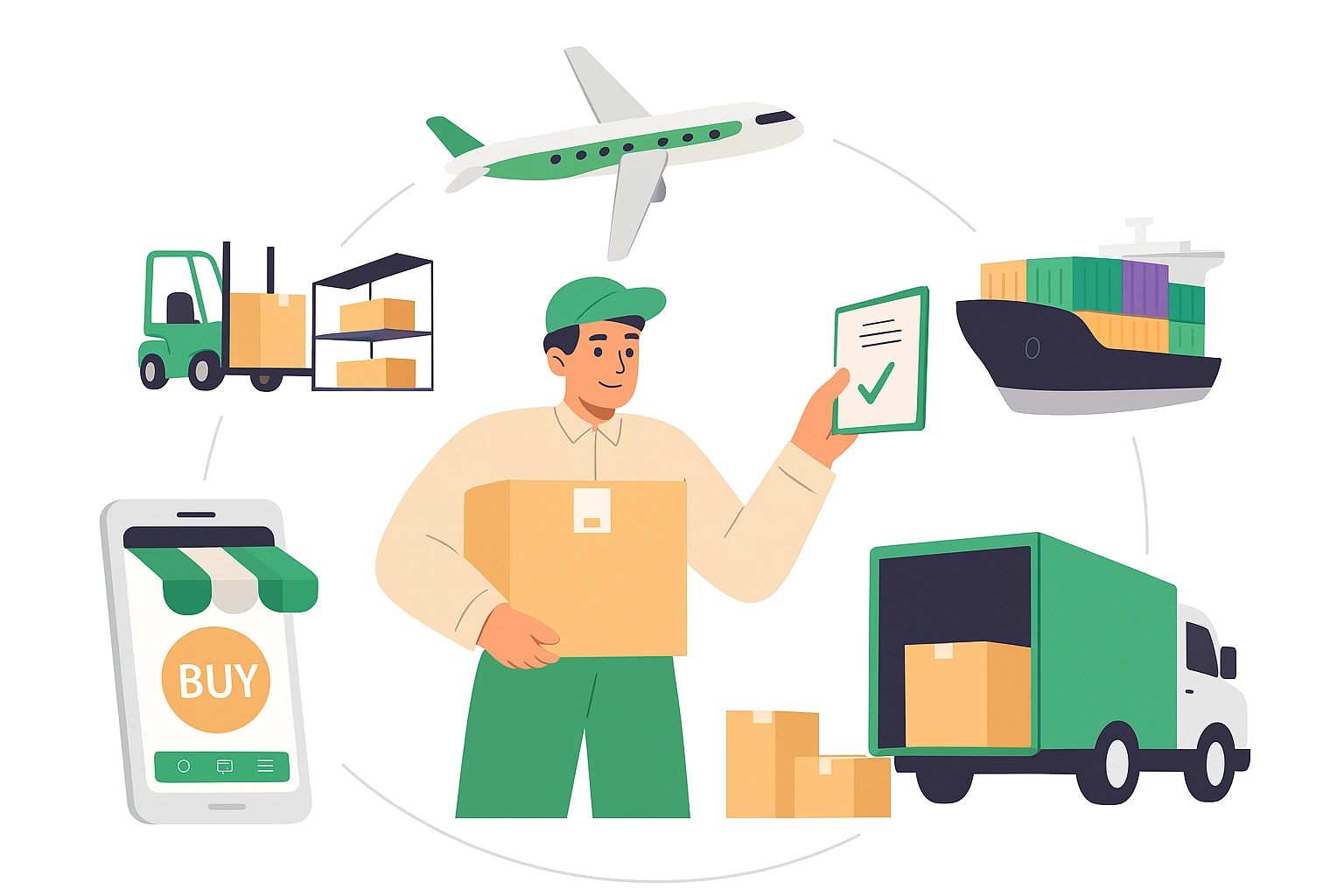
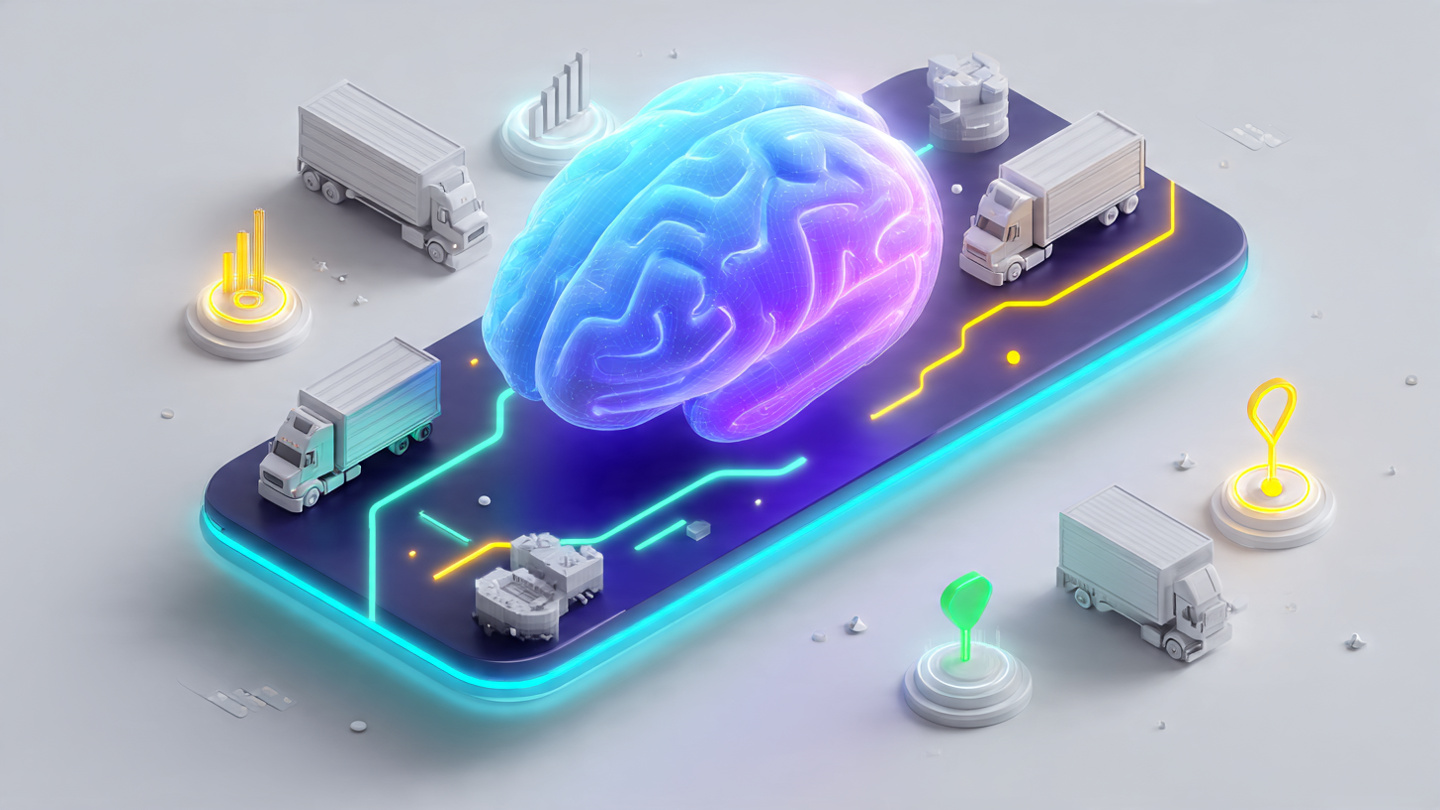
The trucking industry in the United States is becoming more competitive, more digital, and more data-driven. Shippers expect faster delivery updates, drivers expect better communication, and fleet owners need complete visibility into every truck, load, route, and delivery status. Traditional phone calls, spreadsheets, manual dispatch boards, and disconnected systems are no longer enough for modern logistics operations.
This is where AI-powered dispatch software for trucking companies becomes a major advantage.
AI dispatch software helps trucking businesses automate load assignment, optimize routes, track drivers in real time, reduce empty miles, improve delivery accuracy, and make smarter operational decisions. For logistics companies, freight brokers, 3PL providers, and fleet operators, the right dispatch management system can directly improve profitability, customer satisfaction, and fleet productivity.
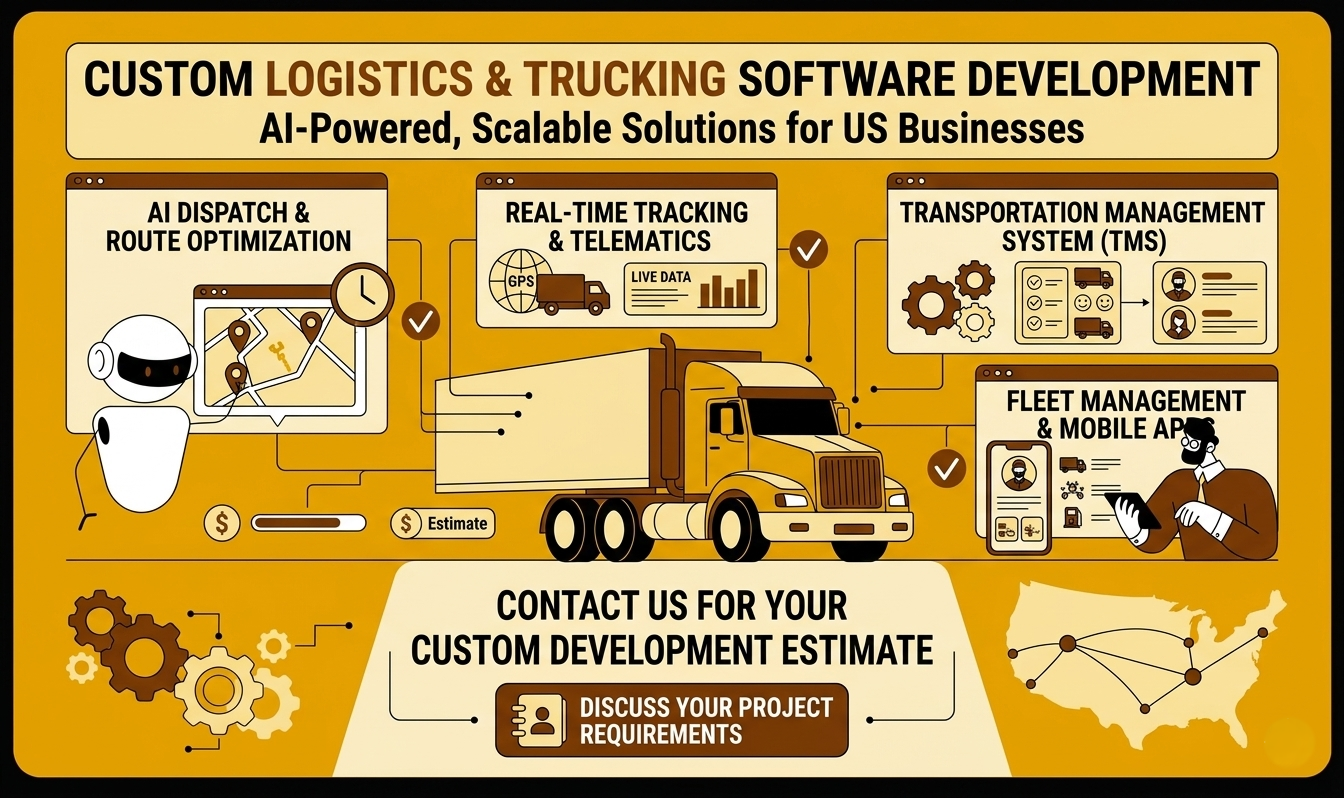
In 2026, trucking companies are not just looking for basic dispatch tools. They want connected platforms that combine transportation management software, fleet tracking, driver mobile apps, AI automation, route optimization, ELD integrations, customer portals, and analytics dashboards into one scalable solution.
What Is AI Dispatch Software for Trucking Companies?
AI dispatch software for trucking companies is a digital platform that helps transportation businesses manage dispatch operations using automation, artificial intelligence, real-time data, and predictive analytics.
Instead of manually assigning loads to drivers, checking availability through calls, calculating routes manually, or updating customers one by one, dispatchers can use an AI-powered system to automate repetitive tasks and make faster decisions.
A modern trucking dispatch software platform can help companies manage:
Load assignment
Driver availability
Truck location
Route planning
Delivery schedules
Fuel efficiency
Real-time shipment tracking
Driver communication
Proof of delivery
Customer notifications
Fleet performance
Compliance documents
Billing and invoicing
Why Trucking Companies Need Smarter Dispatch Software in 2026
The logistics and trucking industry faces several daily challenges. Rising fuel costs, driver shortages, strict delivery timelines, compliance requirements, and customer demand for real-time visibility create pressure on dispatch teams.
Many trucking businesses still depend on manual processes. Dispatchers use spreadsheets, phone calls, emails, WhatsApp messages, and separate tracking tools. This creates data silos and slows down operations.
A trucking company may have one system for accounting, another for GPS tracking, another for load boards, another for driver communication, and another for customer updates. When these systems do not connect, dispatchers spend more time searching for information than solving problems.
AI-powered fleet dispatch software solves this by centralizing operations in one platform.
With a connected dispatch management system, businesses can:
View all active loads on one dashboard
Track trucks and drivers in real time
Assign loads faster
Reduce missed delivery windows
Improve driver productivity
Automate customer status updates
Reduce manual phone calls
Improve route efficiency
Lower operational costs
Make data-backed decisions
For B2B logistics companies, this is not just a technology upgrade. It is a competitive advantage.
Key Features of AI-Powered Trucking Dispatch Software
A modern dispatch platform should do more than basic load management. It should support end-to-end transportation operations from order creation to final delivery.
Below are the most important features of AI dispatch software for trucking companies.
1. Automated Load Assignment
Automated load assignment is one of the most valuable features of dispatch software. Instead of manually checking which driver is available, the system can recommend the best driver based on multiple factors.
These factors may include:
Driver location
Truck availability
Load type
Vehicle capacity
Delivery deadline
Driver hours of service
Route distance
Customer priority
Driver performance history
Equipment type
For example, if a shipment requires a refrigerated truck, the dispatch system can automatically filter available reefer trucks and recommend the most suitable driver nearby.
This reduces manual work and helps dispatchers assign loads faster with fewer mistakes.
2. Real-Time Fleet Tracking
Real-time fleet tracking is essential for modern trucking operations. Fleet managers need to know where every truck is, whether the driver is on schedule, and if there are any route delays.
A trucking dispatch software platform can integrate with GPS devices, ELD systems, telematics platforms, and driver mobile apps to provide live location updates.
With real-time tracking, dispatchers can:
Monitor truck location
Track delivery progress
Identify delays early
Send accurate ETAs to customers
Improve driver accountability
Reduce unnecessary check-in calls
Respond quickly to route changes
For customers, real-time shipment tracking improves transparency and trust. For dispatch teams, it improves control and decision-making.
3. AI-Based Route Optimization
Route optimization software helps trucking companies reduce fuel costs, delivery delays, and empty miles. AI can analyze traffic, distance, weather conditions, road restrictions, tolls, delivery windows, and driver availability to suggest the most efficient route.
For multi-stop deliveries, AI route optimization can automatically arrange stops in the best sequence to save time and reduce mileage.
Benefits of AI-based route optimization include:
Lower fuel consumption
Faster deliveries
Fewer late shipments
Better driver productivity
Reduced vehicle wear and tear
Improved customer satisfaction
More accurate ETAs
For large fleets, even a small reduction in mileage can result in significant monthly savings.
4. Driver Mobile App
A driver mobile app is a critical part of any modern trucking software solution. It connects drivers with dispatchers, customers, and back-office teams.
A driver mobile app can include:
Assigned load details
Route navigation
Pickup and delivery instructions
Real-time chat
Document upload
Proof of delivery
Status updates
Fuel receipts
Inspection reports
Driver availability updates
Push notifications
Instead of calling dispatchers for every update, drivers can use the mobile app to update shipment status, upload documents, confirm delivery, and communicate instantly.
This improves communication and reduces delays caused by manual follow-ups.
5. Digital Proof of Delivery
Paper-based proof of delivery can slow down billing, create document loss, and increase administrative work. A digital proof of delivery feature allows drivers to capture signatures, photos, timestamps, delivery notes, and customer confirmations directly from the mobile app.
Digital proof of delivery helps trucking companies:
Speed up invoicing
Reduce paperwork
Avoid delivery disputes
Improve record management
Provide customers with instant confirmation
Increase operational transparency
For B2B logistics companies, digital documentation is especially useful because customers often require accurate and timely delivery records.
6. Customer Portal
A customer portal allows shippers, brokers, and business customers to view shipment information without contacting the dispatch team repeatedly.
A customer portal can include:
Shipment booking
Load status
Live tracking
ETA updates
Delivery documents
Invoice history
Support requests
Notifications
This improves customer experience and reduces the workload on internal teams. Instead of responding to dozens of “Where is my shipment?” calls every day, dispatchers can let customers access updates directly through the portal.
For trucking companies that want to appear more professional and technology-driven, a customer portal is a powerful feature.
7. ELD and Telematics Integration
ELD and telematics integrations are important for trucking companies that need accurate driver and vehicle data.
By integrating dispatch software with ELD systems, companies can access data such as:
Driver hours of service
Vehicle location
Engine diagnostics
Speed
Idle time
Fuel usage
Mileage
Vehicle health
This helps dispatchers avoid assigning loads to drivers who do not have enough available hours. It also helps fleet managers monitor vehicle performance and identify maintenance issues early.
Popular integrations may include ELD providers, GPS tracking tools, fuel card systems, load boards, accounting software, and transportation management systems.
8. Freight Dispatch Automation
Freight dispatch automation helps reduce repetitive manual work in daily dispatch operations.
The system can automate:
Load creation
Driver assignment
Status updates
Customer notifications
ETA alerts
Document collection
Invoice generation
Exception alerts
Delivery confirmations
Automation is especially helpful for growing trucking companies that manage a high volume of shipments. Instead of hiring more dispatchers for every increase in load volume, businesses can scale operations through software.
9. AI Alerts and Exception Management
In trucking, problems can happen at any time. A driver may be delayed, a truck may break down, traffic may increase, or a delivery window may be missed.
AI-powered dispatch software can identify risks before they become major issues. The system can send alerts when:
A driver is running late
A vehicle goes off route
A delivery deadline is at risk
A truck is idle for too long
A driver exceeds allowed hours
A shipment status is not updated
A customer requires immediate attention
This allows dispatchers to take action quickly and prevent service failures.
10. Analytics and Reporting Dashboard
Data is one of the biggest advantages of using custom trucking dispatch software. A reporting dashboard gives fleet owners and operations managers clear visibility into performance.
Analytics can show:
On-time delivery rate
Driver performance
Fleet utilization
Revenue per mile
Empty miles
Average delivery time
Fuel usage
Route efficiency
Customer performance
Dispatcher productivity
Load profitability
With the right data, trucking companies can identify bottlenecks, reduce costs, improve planning, and make better business decisions.
Benefits of AI Dispatch Software for Trucking Companies
AI-powered dispatch software delivers value across operations, finance, customer service, and driver management.
Here are the biggest benefits for trucking and logistics businesses.
Improved Operational Efficiency
Dispatch teams can manage more loads with less manual effort. Automated load assignment, route optimization, real-time tracking, and digital communication reduce the time spent on repetitive tasks.
This allows dispatchers to focus on exceptions, customer service, and strategic planning.
Reduced Empty Miles
Empty miles reduce profitability. AI dispatch software can help identify nearby loads, optimize backhauls, and improve fleet utilization.
By matching trucks with the right loads based on location and availability, companies can reduce wasted mileage and improve revenue per truck.
Better Customer Visibility
B2B customers expect real-time shipment visibility. With customer portals, automated alerts, and live tracking, trucking companies can offer a better service experience.
This can help improve customer retention and make the company more competitive when bidding for contracts.
Lower Fuel and Operating Costs
Route optimization, reduced idling, better planning, and improved driver behavior can help lower fuel costs. Fleet managers can use analytics to monitor inefficiencies and reduce unnecessary expenses.
Over time, these savings can significantly improve margins.
Faster Billing and Payments
Digital proof of delivery and automated invoicing help speed up the billing cycle. Once a shipment is delivered, documents can be instantly uploaded and invoices can be generated faster.
This improves cash flow and reduces administrative delays.
Stronger Driver Communication
A driver mobile app reduces confusion and improves communication between dispatchers and drivers. Drivers receive clear instructions, route details, updates, and delivery requirements directly on their mobile devices.
Better communication leads to fewer errors and smoother deliveries.
Scalable Business Growth
As trucking companies grow, manual dispatch processes become harder to manage. A scalable dispatch software platform allows businesses to handle more trucks, drivers, customers, and loads without losing control.
This is especially important for companies expanding across multiple regions or adding new service lines.
Custom Dispatch Software vs Ready-Made Dispatch Software
Many trucking companies ask whether they should buy off-the-shelf dispatch software or invest in custom dispatch software development.
Both options have advantages, but the right choice depends on your business model, fleet size, workflows, and growth plans.
A. Ready-Made Dispatch Software
Ready-made dispatch software is faster to launch and usually has a lower upfront cost. It may work well for small fleets with standard operations.
However, it can have limitations:
Limited customization
Monthly subscription costs
Features you may not need
Integration restrictions
Workflow limitations
Data ownership concerns
Scalability issues
If your company has unique dispatch workflows, customer requirements, or integration needs, ready-made software may not be flexible enough.
B. Custom Dispatch Software
Custom dispatch software is built around your exact business process. It can include the features, integrations, dashboards, automation rules, and mobile apps your team needs.
Custom software is ideal for companies that need:
Unique dispatch workflows
Multiple user roles
Integration with existing TMS or ERP
Custom customer portals
AI-powered automation
Advanced reporting
Multi-location operations
Scalable architecture
Full control over data and features
For growing trucking companies, freight brokers, 3PLs, and logistics providers, custom dispatch software can provide long-term value and competitive differentiation.
How Much Does AI Dispatch Software Development Cost in 2026?
The cost of AI dispatch software development depends on the platform’s complexity, features, integrations, design, development location, and technology stack.
Here is a general cost estimate:
Basic Dispatch Software
A basic trucking dispatch software system may cost between $20,000 and $35,000.
It may include:
Load management
Driver management
Basic dispatch dashboard
Shipment status updates
Simple reporting
Admin panel
This option is suitable for small trucking businesses that want to move away from spreadsheets and manual dispatching.
Mid-Level Dispatch Management System
A mid-level dispatch software platform may cost between $35,000 and $70,000.
It may include:
Real-time fleet tracking
Driver mobile app
Route optimization
Digital proof of delivery
Customer portal
Notifications
ELD or GPS integration
Analytics dashboard
This is a good option for growing logistics companies and mid-sized fleets.
Advanced AI-Powered Dispatch Platform
An advanced AI dispatch software platform may cost between $70,000 and $120,000+.
It may include:
AI-based load assignment
Predictive ETA
Advanced route optimization
Automated exception management
Multi-branch operations
Custom TMS integration
Telematics integration
Billing automation
Advanced analytics
Scalable cloud architecture
This type of platform is ideal for large trucking companies, enterprise logistics providers, 3PLs, and businesses managing complex transportation operations.
Businesses evaluating larger logistics platforms can also explore the cost to develop solutions similar to modern digital freight networks.
Factors That Affect Dispatch Software Development Cost
Several factors influence the final cost of trucking software development.
1. Number of Features
More features mean more development time. A simple dispatch dashboard will cost less than a full transportation management platform with AI, tracking, mobile apps, and integrations.
2. Mobile App Requirements
If you need separate mobile apps for drivers, dispatchers, and customers, the cost will increase. However, mobile apps are often necessary for real-time communication and field operations.
3. Third-Party Integrations
Integrations with ELD systems, GPS tracking platforms, load boards, payment gateways, accounting tools, CRMs, and ERPs can affect cost.
4. AI and Automation Complexity
Basic automation is less expensive than advanced AI models for predictive ETA, load matching, route optimization, and operational forecasting.
5. UI/UX Design
A user-friendly dashboard improves adoption. Dispatchers need clean workflows, fast search, map views, alerts, and simple navigation.
6. Security and Compliance
Trucking companies handle sensitive business, customer, driver, and shipment data. Secure login, role-based access, audit logs, encryption, and compliance features are important.
7. Scalability
If the software needs to support hundreds or thousands of trucks, multiple branches, and high shipment volumes, the architecture must be designed for scalability from the beginning.
Recommended Tech Stack for AI Dispatch Software
A reliable technology stack is important for performance, security, and scalability.
A common tech stack for custom dispatch software development may include:
Frontend: React.js, Next.js, Angular
Backend: Node.js, Python, Java, .NET
Mobile App: Flutter, React Native, Swift, Kotlin
Database: PostgreSQL, MySQL, MongoDB
Cloud: AWS, Microsoft Azure, Google Cloud
Maps and Routing: Google Maps API, Mapbox, HERE Maps
AI/ML: Python, TensorFlow, machine learning models
Integrations: ELD APIs, GPS APIs, accounting APIs, TMS APIs
Security: OAuth, JWT, encryption, role-based access control
The best technology stack depends on business goals, budget, scalability needs, and integration requirements.
Who Should Invest in AI Dispatch Software?
AI-powered dispatch software is useful for many types of transportation businesses, including:
Trucking companies
Freight brokers
3PL logistics providers
Last-mile delivery companies
Drayage companies
Refrigerated transport companies
Flatbed trucking companies
Courier and delivery businesses
Fleet operators
Enterprise logistics teams
If your company manages multiple drivers, trucks, routes, customers, and shipments, dispatch automation can improve control and efficiency.
Signs Your Trucking Business Needs Custom Dispatch Software
Your company may need custom dispatch software if:
Dispatchers rely heavily on spreadsheets
Drivers call frequently for updates
Customers ask for shipment status repeatedly
Load assignment takes too much time
You have poor visibility into fleet location
Billing is delayed due to missing documents
Your current software does not match your workflow
You use too many disconnected tools
You are losing money due to empty miles
You want to scale operations without adding more manual work
If these problems are common in your business, investing in trucking dispatch software can deliver strong long-term value.
Future of AI in Trucking Dispatch Operations
AI will continue to transform trucking and logistics operations. In the future, dispatch platforms will become even more predictive and autonomous.
Upcoming trends may include:
Predictive maintenance alerts
Automated load matching
AI-based pricing recommendations
Voice-enabled dispatch assistants
Predictive delivery delay alerts
Smarter fuel optimization
Automated backhaul planning
AI-powered customer service chatbots
Advanced driver performance scoring
Autonomous fleet coordination
Trucking companies that adopt AI-powered logistics software early will be better prepared for changing customer expectations and competitive pressure.
Final Thoughts
AI-powered dispatch software is no longer just a nice-to-have tool for trucking companies. It is becoming an essential platform for improving efficiency, visibility, customer service, and profitability.
For US logistics and trucking teams, the right dispatch management system can help automate load assignment, optimize routes, track fleets in real time, improve driver communication, reduce empty miles, and speed up billing.
While ready-made dispatch tools may work for small fleets, growing transportation companies often need custom dispatch software that fits their exact workflows, integrations, and long-term business goals.
If your trucking business is still using spreadsheets, disconnected systems, and manual dispatching, now is the right time to modernize operations with AI-powered trucking software.
A custom dispatch platform can help your company build a stronger, smarter, and more scalable logistics operation in 2026 and beyond.
FAQs:
1. What is AI-powered dispatch software for trucking companies?
AI-powered dispatch software is a digital platform that helps trucking companies automate and manage dispatch operations using artificial intelligence, real-time tracking, route optimization, and data analytics. It helps dispatchers assign loads, track drivers, optimize routes, send customer updates, manage documents, and improve fleet productivity from one centralized system.
2. How does AI dispatch software help trucking companies?
AI dispatch software helps trucking companies by automating manual dispatch tasks, improving driver assignment, reducing empty miles, optimizing routes, and providing real-time fleet visibility. It also helps dispatchers make faster decisions by analyzing driver location, truck availability, delivery deadlines, hours of service, traffic conditions, and shipment priority.
3. What are the main features of trucking dispatch software?
The main features of trucking dispatch software include load management, automated dispatching, real-time fleet tracking, AI route optimization, driver mobile app, digital proof of delivery, customer portal, ELD integration, GPS tracking, shipment status updates, billing automation, reporting dashboard, and customer notifications.
4. Why do trucking companies need AI-based dispatch software in 2026?
Trucking companies need AI-based dispatch software in 2026 because logistics operations are becoming more competitive, customer expectations are higher, and manual dispatching is no longer efficient. AI-powered dispatch software helps trucking businesses reduce costs, improve delivery performance, increase fleet utilization, and provide better shipment visibility to customers.
5. How much does it cost to build AI dispatch software?
The cost to build AI dispatch software usually depends on features, integrations, mobile apps, AI complexity, and platform design. A basic dispatch software may cost around $25,000 to $40,000, a mid-level dispatch platform may cost $40,000 to $70,000, and an advanced AI-powered dispatch system may cost $70,000 to $120,000+.
6. Is custom dispatch software better than ready-made dispatch software?
Custom dispatch software is better for trucking companies with unique workflows, complex operations, multiple integrations, or long-term scaling goals. Ready-made dispatch software can work for small fleets, but it may have limitations in customization, automation, reporting, and integration. Custom dispatch software gives better control over features, data, and business processes.
7. Can dispatch software integrate with ELD and GPS tracking systems?
Yes, modern dispatch software can integrate with ELD systems, GPS tracking platforms, telematics devices, fuel cards, load boards, accounting software, ERP systems, and transportation management software. These integrations help trucking companies access real-time driver, vehicle, route, and shipment data from one dashboard.
8. What is the role of a driver mobile app in dispatch software?
A driver mobile app helps drivers receive load details, update shipment status, upload delivery documents, capture proof of delivery, communicate with dispatchers, and access route instructions. It reduces phone calls, improves communication, and helps trucking companies manage field operations more efficiently.
9. How does AI route optimization reduce trucking costs?
AI route optimization reduces trucking costs by selecting the most efficient routes based on traffic, distance, fuel usage, delivery windows, truck capacity, weather, and road restrictions. It helps reduce fuel consumption, avoid unnecessary mileage, improve delivery speed, and lower vehicle operating costs.
10. Who should invest in AI dispatch software?
AI dispatch software is ideal for trucking companies, freight brokers, 3PL providers, fleet operators, last-mile delivery companies, drayage businesses, refrigerated transport companies, courier companies, and enterprise logistics teams that want to improve dispatch efficiency, fleet visibility, delivery performance, and customer experience.
11. Is AI dispatch software useful for small trucking companies?
Yes, AI dispatch software can be useful for small trucking companies, especially if they want to move away from spreadsheets, manual calls, and disconnected tools. Small fleets can start with basic dispatch software and later scale to advanced features like AI route optimization, customer portals, and automated billing.