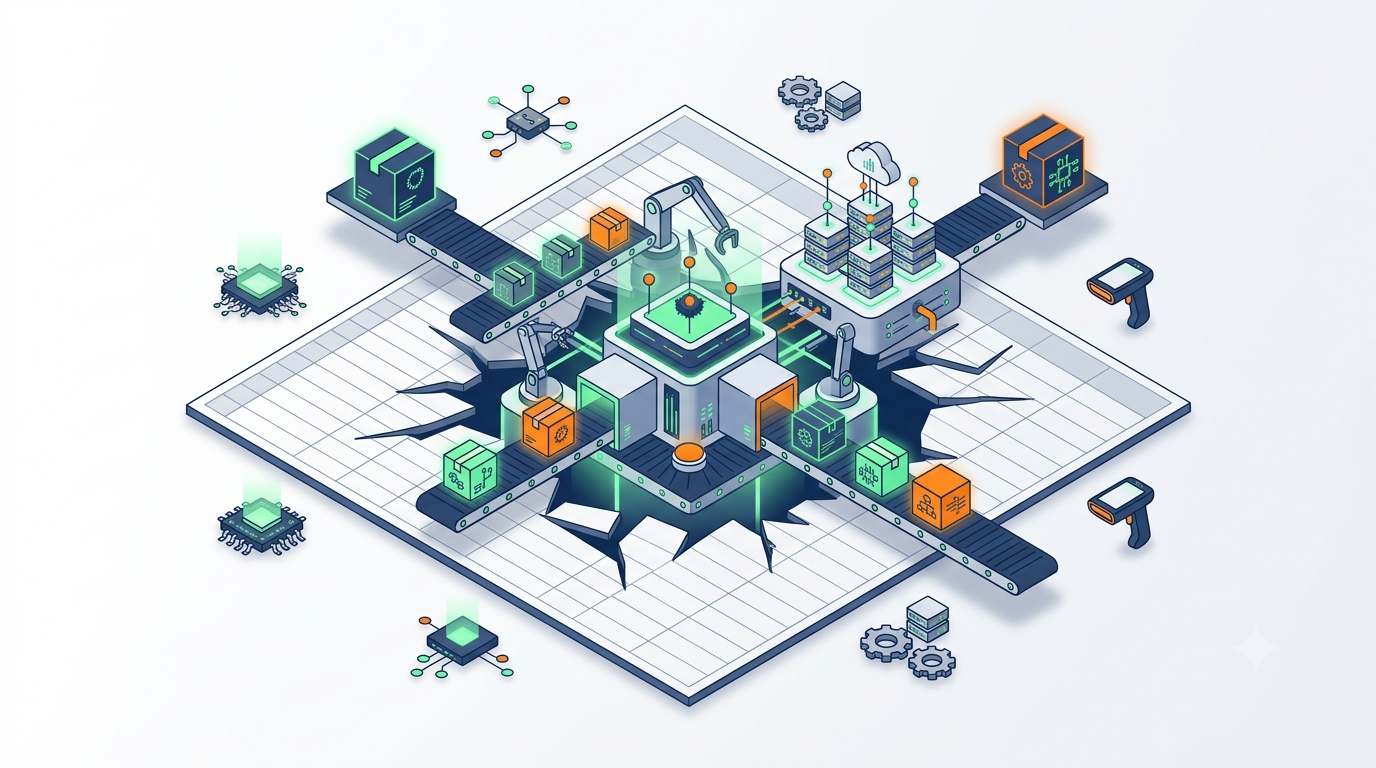
It is 4:30 PM on a Friday, and your warehouse floor is in a state of controlled chaos. The cutoff for outgoing freight shipments is exactly thirty minutes away.
Across the facility, your lead operations manager is staring blankly at a frozen monitor. A 45-column master spreadsheet—the digital duct tape holding your entire fulfillment operation together—has just crashed.
Around fifty thousand dollars in pending orders sit on the dock. Your team is frantically trying to cross-reference packing slips by hand because the lookup formulas broke when a junior clerk pasted the wrong tracking string.
You cannot scale a high-velocity 3PL on the back of a VLOOKUP.
Let’s be honest. You already know this. You have watched your team spend countless hours manually reconciling billing spreadsheets, chasing down carrier tracking numbers, and typing order details from an email into a legacy dispatch system.
Every time you bring on a new client with complex routing requirements, your operational overhead scales right alongside your revenue. You end up hiring more administrative staff just to manage the manual workarounds. That is not scaling. That is just getting bloated.
Here's the thing... if your software requires your staff to constantly export data to a spreadsheet just to do their daily work, your system is actively sabotaging your margins.
The "Why Now" Factor: The Margin Squeeze of Modern Logistics
Look at the operational realities of the logistics landscape right now. We are no longer living in an era where brand-name clients are willing to wait twenty-four hours for an inventory reconciliation report.
Merchant expectations have shifted dramatically. Direct-to-consumer brands and B2B manufacturers alike expect sub-second API responses, real-time inventory visibility, and automated returns reconciliation. If you cannot provide a transparent digital window into their inventory, they will happily take their contract to a competitor who can.
On top of client demands, you are facing unprecedented pressure from rising real estate overhead and persistent labor friction. Margins in third-party logistics have never been tighter.
You simply cannot afford the administrative bloat of manual data entry. You cannot afford to swallow unbilled accessorial fees because your team forgot to manually log a pallet restacking event on a clipboard.
Investing in custom 3PL software is no longer a vanity project for elite fulfillment networks. It has become the baseline requirement for operational survival.
Off-the-shelf solutions promise the world but force you to run your unique warehouse workflows through their rigid templates. They trap you in an endless cycle of expensive seat licenses and clunky API workarounds.
When you rely on generic software, you are forcing your operators to fit into a pre-packaged box. You lose the exact operational agility that won you your clients in the first place.
The Legacy Trap: Why "Good Enough" Tech is Killing Your Valuation
Let’s examine the typical software journey of a growing logistics provider. It almost always begins in the same familiar place.
In the early days, you manage inventory and billing via basic shared spreadsheets. It works well enough when you have three clients and a ten-thousand-square-foot warehouse. You know exactly where every pallet is stored.
As you expand to multiple facilities and dozens of clients, the cracks begin to show. To stop the bleeding, you purchase a generic cloud warehouse management system. You sign a multi-year enterprise contract, expecting your operational headaches to vanish overnight.
[Spreadsheet Chaos] ➔ [Rigid Off-the-Shelf SaaS] ➔ [The Custom Platform Solution]
But within six months, you discover the harsh reality of off-the-shelf software.
The billing module cannot handle the complex, tiered accessorial agreements you negotiated with your anchor client. The pick-and-pack logic cannot accommodate the specialized kitting assembly your fastest-growing merchant requires.
So what do you do? You create external spreadsheets to bridge the gap between your expensive software and your actual warehouse reality.
If you have to build manual workarounds to make your software function, you do not own a platform—you own a liability.
Every manual intervention is a silent leak in your bottom line. It introduces human error, slows down dock-to-stock times, and blinds your executive team to true operational costs.
Real-World Scenario: The $120,000 Billing Leak
Let’s get away from abstract concepts and examine a concrete operational breakdown. Consider a mid-sized fulfillment provider we will call Apex Logistics, managing around twelve thousand orders a day across two regional facilities.
Apex was running a prominent commercial warehouse management system alongside a basic accounting package. On paper, they were highly profitable. In reality, their operational margins were steadily shrinking, and the leadership team could not figure out why.
The bleeding was happening right on the receiving dock.
Every week, Apex received dozens of poorly consolidated containers from overseas suppliers. Unloading these containers required significant manual labor—hand-unloading loose cartons, sorting mixed SKUs, and wrapping custom pallets.
THE MANUAL LEAK WORKFLOW:
1. Dock worker restacks loose cartons for 45 minutes.
2. Worker jots down "45 mins lumper labor" on a paper tally sheet.
3. Paper sheet gets buried under shipping labels or lost on the forklift.
4. Accounting runs billing at month-end without the labor sheet.
5. Client gets free manual labor; Apex absorbs the direct payroll loss.
Apex had contractual rights to charge their clients for these accessorial services at forty-five dollars per man-hour. But because their commercial WMS had no mobile intake workflow for ad-hoc accessorial tracking, the dock managers had to log these hours on paper clipboards.
You know exactly what happened next.
Clipboards were misplaced on forklifts. Paper tallies sat on supervisors' desks until past the monthly billing cutoff. Busy floor managers simply forgot to write down the extra labor during peak receiving hours.
When Apex finally conducted an extensive operational audit, they uncovered a staggering truth. They were performing over five hundred hours of unbilled accessorial labor every single month. They were giving away roughly one hundred twenty thousand dollars in free labor annually, purely because their software could not capture operations at the point of activity.
The solution was not to hire an auditing clerk to chase down paper tallies. The solution was designing a custom logistics automation platform.
By building a specialized mobile receiving module, dock workers could instantly log non-standard unloading events on their handheld scanners. The system required a quick snapshot of the messy container and a single button tap to start a billing timer.
The custom platform pushed this data directly into the automated billing engine. The immediate recovery of those lost accessorial fees entirely paid for the software development within nine months.
The Counter-Intuitive Insight: Buying Commercial Software Often Takes Longer Than Building Custom
Here is a hard truth that enterprise software sales reps desperately hope you never figure out.
We have been conditioned to believe that purchasing an off-the-shelf system is the fast track to modernization. The traditional logic dictates that building custom software is a multi-year money pit, while buying a pre-packaged license gets you up and running in weeks.
Look at what actually happens during an enterprise software implementation in a complex 3PL environment.
You do not simply turn on an enterprise WMS. You spend eight to twelve months agonizing over configuration tables, custom scripting, and painful API integrations. You pay exorbitant hourly fees to specialized implementation consultants just to force the generic software to understand your specific workflow.
THE ENTERPRISE SaaS IMPLEMENTATION TRAP:
• Month 1-3: Paying software licensing fees while analyzing workflow gaps.
• Month 4-8: Hiring expensive external consultants to write custom integration scripts.
• Month 9-12: Discovering core limitations; building external spreadsheet workarounds.
• Result: 12 months of disruption, high recurring license costs, and compromised workflows.
You spend a full year wrestling with legacy codebases and compromising your standard operating procedures just to fit the vendor's rigid database structure.
Now consider the modern reality of 3PL software development.
We are no longer building software from scratch using raw machine code. By utilizing modern development frameworks, reusable microservices, and robust cloud infrastructure, an experienced development team can build and deploy a tailored logistics core faster than an enterprise vendor can finish their scoping workshops.
When you build custom, you are not paying for bloatware and legacy features you will never use. You are engineering a lean, purpose-built engine designed specifically around your operational strengths.
The Actionable Framework: How to Architect Your Custom Logistics Platform
So what does this mean for you? If you are ready to stop renting rigid software and start building an operational asset, you need a disciplined game plan.
You cannot attempt to rip out your existing systems overnight. You must take a structured, modular approach to developing your platform.
Here is the exact four-phase architectural playbook for transitioning from disjointed legacy systems to a high-performance custom platform.
Phase 1: Triage and Data Harmonization
Before you write a single line of interface code, you must fix your data plumbing. Your warehouse cannot function if incoming order streams and inventory feeds are speaking different languages.
Audit All Ingestion Channels: Catalog every external connection point. Document your EDI 940/945 requirements, custom API endpoints for Shopify or ERPs, and flat-file FTP transfers from legacy merchants.
Build a Centralized Intake Microservice: Design an isolated middleware layer whose sole job is to ingest these wild, varied data formats and standardize them into a single, clean JSON structure.
Establish a Single Source of Truth: Decouple your inventory ledger from your legacy front-end software. Ensure every transaction, hold, and allocation is recorded in a highly secure, real-time database.
Phase 2: The Core Engine (Inventory, Billing, and Dispatch)
With clean data flowing into your architecture, you can begin constructing the foundational operational modules. This is where you eliminate the spreadsheets.
Architect Dynamic Warehouse Mapping: Do not settle for static bin locations. Build your location database to support dynamic slotting, volumetric capacity tracking, and multi-deep pallet configurations.
Construct an Automated Event-Driven Billing Engine: Tie your financial ledger directly to physical warehouse scans. When an operator triggers a pick, a pack, or a special handling event, the system must instantly calculate and attach the contractual accessorial fee.
Implement Custom Transportation Management Software: Build a localized rating and routing engine. Integrate directly with regional carrier APIs to automate rate shopping, generate compliant shipping labels, and track trailer yard allocations without jumping into external portals.
Phase 3: The Client Visibility Portal
Your clients do not want to call your account managers to ask about shipping statuses. They want self-service transparency.
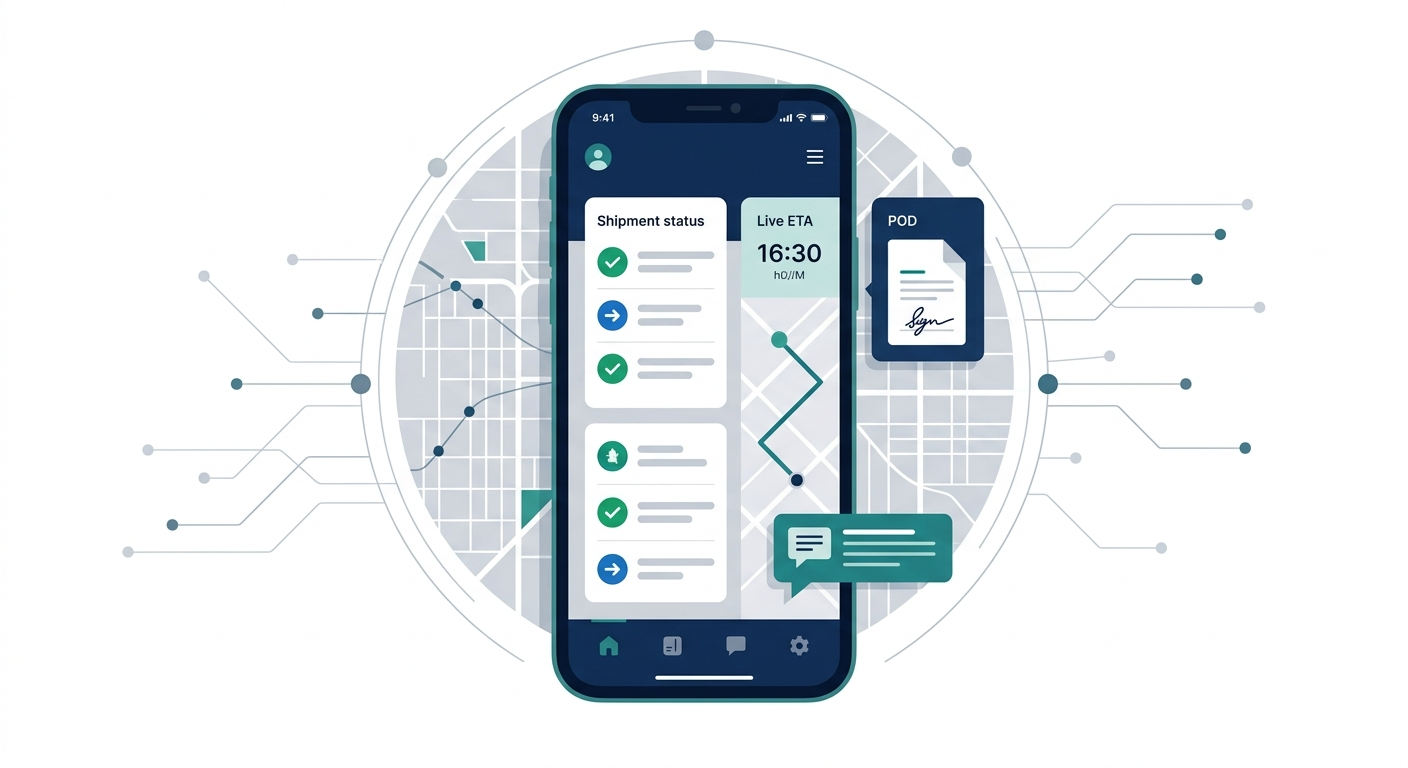
Design a Self-Service Command Center: Build a dedicated web application for your merchants. Give them real-time views of their inventory velocity, outbound fulfillment statuses, and historical return tracking.
Automate Exception Notifications: Instead of letting clients discover a shipping delay on their own, build automated webhooks that alert their customer service teams the moment a carrier encounters a weather exception or a damaged parcel.
Provide Transparent Billing Previews: Eliminate the monthly invoice disputes by showing clients their accumulating storage and fulfillment costs in real time throughout the month.
Phase 4: Autonomous Exception Handling and Optimization
Once your core platform is operating smoothly, you can introduce advanced automation to dramatically optimize your labor force.
Implement Smart Cartonization Logic: Build algorithms that calculate the exact box size required for an order based on item dimensions and weight, eliminating guesswork at the packing station and slashing dimensional weight shipping penalties.
Optimize Dynamic Picking Paths: Stop sending pickers on erratic zig-zag routes across your facility. Use batch-picking algorithms to group orders by aisle and calculate the most efficient walking paths through the warehouse.
Enable Automated Carrier Fallback: If a primary carrier API times out or rejects a package during peak shipping cutoff, program your system to instantly reroute the shipment to a secondary carrier without requiring a manager's override.
FAQ: The Skeptical Buyer's Interrogation
You are likely reading this with a healthy dose of executive skepticism. You have seen technology projects go sideways before. Let’s address the exact questions keeping you on the fence.
1. Isn't building custom software a massive, open-ended money pit?
Only if you build without a clear operational scope. When you buy enterprise off-the-shelf software, you are committing to massive, compounding monthly licensing fees that scale up every time you hire a new warehouse worker or add a new facility.
Custom software requires an upfront capital investment, but it converts your technology from a perpetual operating expense into a proprietary asset. By targeting your highest-cost bottlenecks first—such as automated accessorial billing or optimized picking—your initial build pays for itself through recovered revenue and reduced labor overhead before you even start the next phase.
2. What happens if the development agency or internal team gets hit by a bus?
This is a legitimate fear if you allow developers to build your platform using obscure, proprietary coding languages. The protection against this risk comes down to enforcing strict engineering standards from day one.
You must require your development team to build on mainstream, open-source frameworks like React, Node.js, or Python. You must insist on comprehensive, automated documentation, clean microservice architecture, and full ownership of your source code and cloud environment. When you own the unencumbered codebase and utilize standard architectural patterns, any skilled development firm can seamlessly take over the project if needed.
3. How do we transition our warehouse to a new platform without halting our daily operations?
You never perform a complete overnight system swap in an active fulfillment center. Attempting a total cutover on a single weekend is a guaranteed recipe for lost inventory and missed shipping cutoffs.
You execute a phased, co-pilot migration strategy. You keep your legacy system running while spinning up your new custom platform alongside it. You transition one single, low-complexity client to the new software first. You let your warehouse staff run the new workflows in a controlled environment, smooth out the edge cases, and then systematically migrate your remaining clients over facility by facility.

Stop Modifying Spreadsheets. Start Architecting Your Advantage.
Look... every day you spend maintaining fragile spreadsheets and fighting rigid software is a day your competitors spend capturing your market share.
Your operational staff is working hard, but your technology is holding them back. You cannot achieve true enterprise valuation while relying on manual workarounds to close your billing loops.
It is time to stop renting generic tools that compromise your operational efficiency. It is time to build a platform that fits the exact way you do business.
Let’s sit down and inspect your operational workflows. Schedule a whiteboard architecture session with our logistics software engineering team today. We will audit your current software stack, identify your primary billing leaks, and map out a clean, modular roadmap to build your proprietary 3PL platform.