It's 4:47 PM on a Friday. Your best dispatcher just found out three drivers are stuck at a border crossing, two loads got double-booked, and a customer is calling — again — asking where their shipment is.
She's not checking a dashboard. She's toggling between six browser tabs, a TMS that was built in 2011, and a spreadsheet someone named "FINAL_v3_ACTUAL.xlsx."
Sound familiar?
This is the reality for most logistics operations right now, no matter how much money got poured into "digital transformation" over the last five years. The tools got fancier. The chaos stayed the same. And here's the uncomfortable truth: most supply chain software still requires a human to translate the problem before the system can help.
Generative AI changes that equation. Not because it's flashy or futuristic — but because it finally lets your team ask questions in plain English and get real answers, instead of building another report nobody reads.
Let's talk about what that actually looks like on the ground.
Why This Matters Right Now, Not Two Years From Now
Here's the thing — logistics has always been a data-rich, insight-poor industry. You've got telematics data, EDI feeds, weather APIs, fuel prices, driver hours-of-service logs, customs paperwork. Mountains of it.
The problem was never a lack of data. It was that turning raw data into a decision took a human analyst, a BI tool, and usually three days.
Generative AI collapses that timeline to seconds. That's the entire shift. It's not about robots driving trucks — that's a different conversation for a different decade. It's about compressing the time between "something happened" and "here's what to do about it."
A few reasons this is happening in 2025 specifically, not before:
Large language models finally got good enough at reasoning over structured data (rate tables, load boards, ELD logs) instead of just chatting.
Fleet management software vendors opened up their APIs, so AI copilots can actually plug into TMS and telematics platforms instead of living in a demo sandbox.
Freight margins are still brutally thin post-2023 downturn, so operators are finally willing to pay for tools that save headcount, not just add dashboards.
Enough case studies now exist that this isn't theoretical anymore. Real fleets are running this in production.
That last point matters most. Two years ago, this was a slide deck. Today it's a line item in your P&L.
A Real Scenario: The Detention Fee Nobody Caught
Let's make this concrete, because vague AI promises don't pay anyone's salary.
A mid-size regional carrier — 140 trucks, dry van and reefer mix — was losing roughly $180,000 a year in unbilled detention charges. Not because their contracts didn't cover detention. Because nobody had time to cross-reference the check-in/check-out timestamps from the ELD against the BOL data and the customer contract terms for every single load.
That's genuinely tedious work. It's also exactly the kind of pattern-matching task a language model handles without complaining.
They set up a freight audit and payment workflow where an AI system pulled ELD timestamps, matched them against contract-specific detention thresholds, flagged discrepancies, and auto-drafted the invoice language for the billing team to review. Not approve blindly — review. Human stays in the loop for the actual send.
Results after five months:
Recovered detention revenue jumped from roughly 40% of eligible claims to 91%.
Billing team time spent on detention research dropped from about 12 hours a week to under 90 minutes.
Customer disputes actually went down, because the AI-generated documentation was more thorough than what a rushed human produced under deadline pressure.
Counter-intuitive insight: most companies assume AI in logistics is about prediction — forecasting demand, predicting delays. But the highest ROI use cases right now are boring. They're about recovering money you already earned but never billed for. Nobody writes case studies about detention fee recovery because it's not sexy. It's also where the fastest payback lives.

Where Generative AI Actually Earns Its Keep
Let's get specific, because "AI will transform logistics" is a sentence with zero operational value. Here's where it's actually working in production right now, not in a pilot that quietly died.
1. Freight Rate Negotiation and Spot Market Analysis
Instead of a broker manually checking DAT and Truckstop, an AI copilot ingests historical lane data, current market rates, fuel surcharges, and your carrier scorecards, then recommends a rate range in real time. Your negotiator still makes the call. They just walk in with better ammunition.
2. Predictive Maintenance That Actually Predicts Something
Old-school telematics gave you a check-engine light after the problem started. Generative AI models trained on sensor data, historical repair logs, and manufacturer service bulletins can flag "this specific truck's transmission pattern matches 14 units that failed within 30 days" — before the light even comes on.
One national fleet reported cutting unplanned downtime by 23% using this approach, largely because the system explained why it flagged a truck, in plain language a shop foreman could act on immediately, instead of just throwing a fault code at him.
3. Supply Chain Visibility and Exception Management
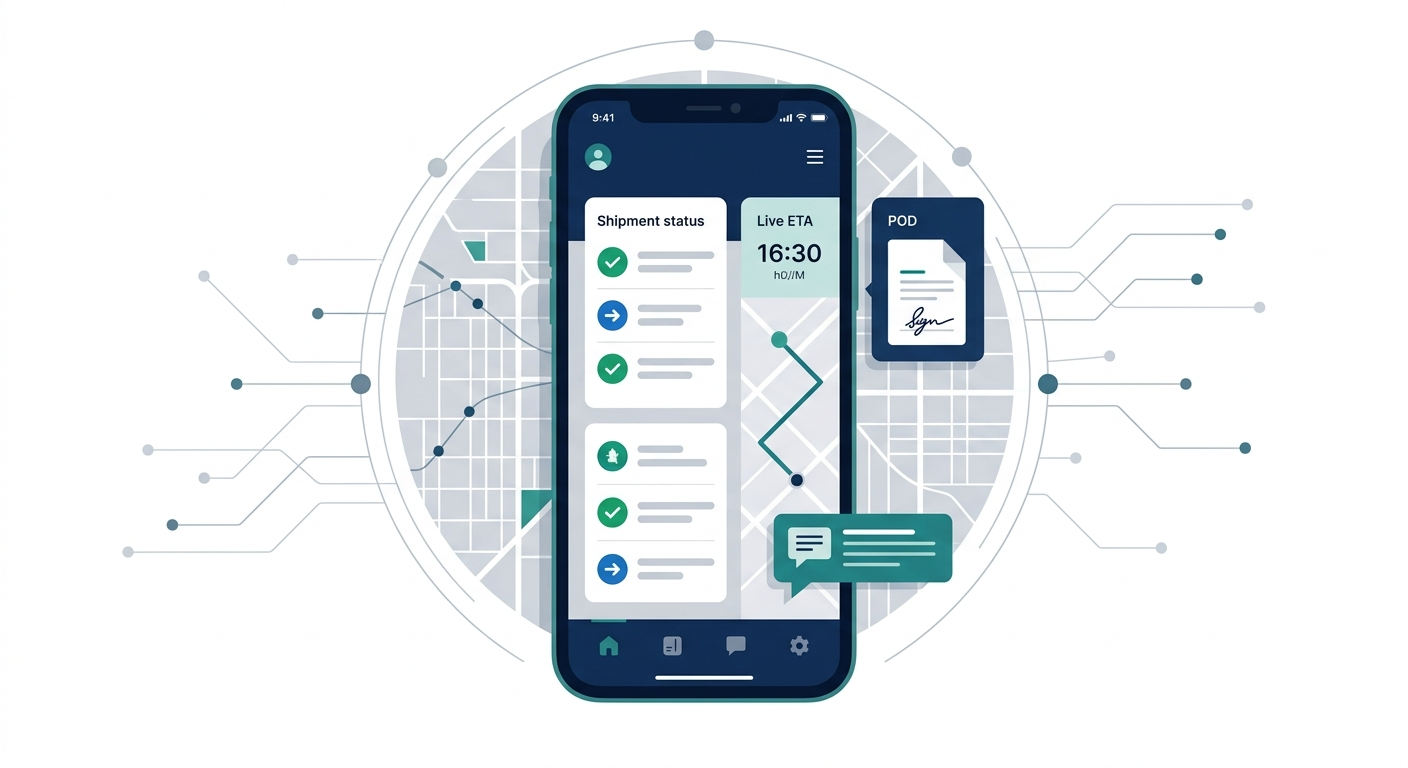
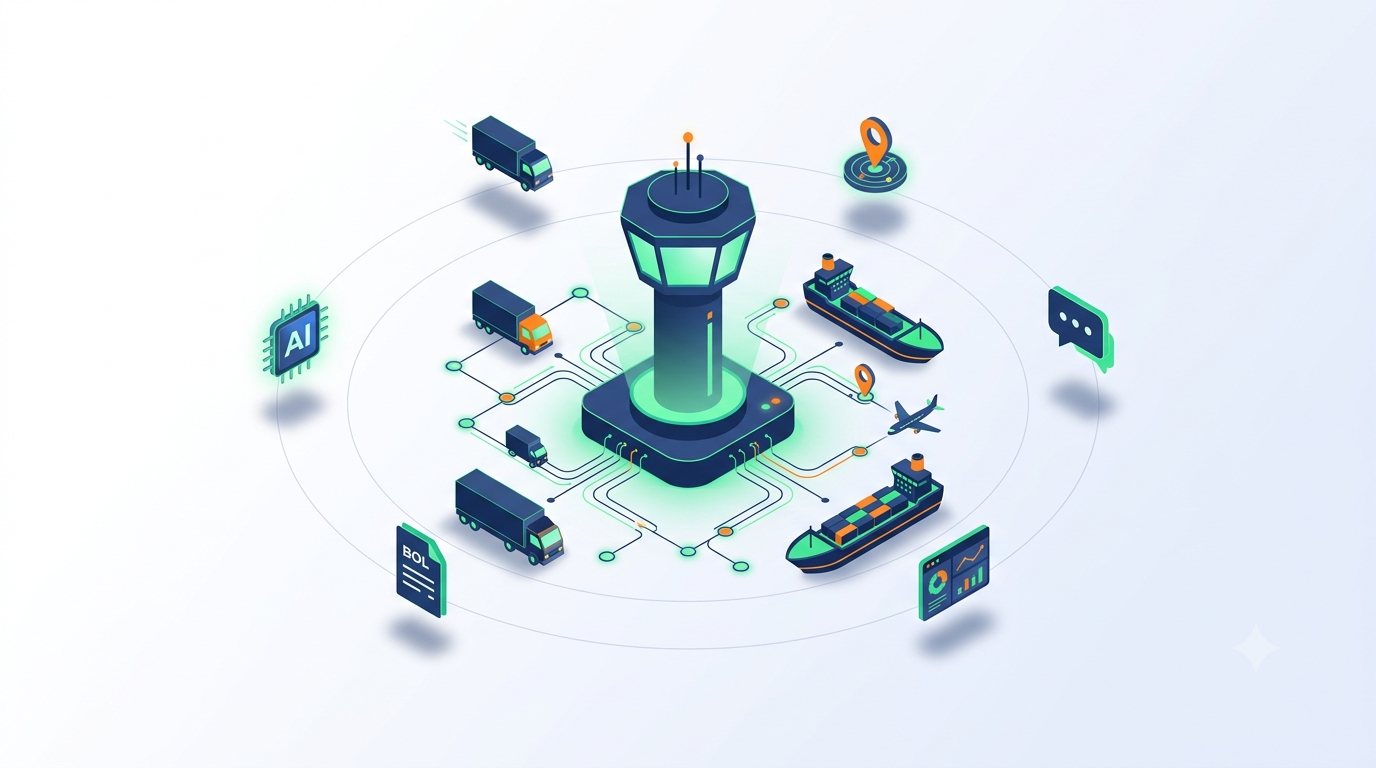
This is the big one for shippers and 3PLs. Instead of a control tower team manually watching forty dashboards, an AI layer monitors shipments across carriers and modes, and only surfaces the exceptions that actually need a human decision.
Improving supply chain visibility isn't about more data on more screens — that's actually the opposite of helpful. It's about a system smart enough to know which 3% of shipments need your attention today.
4. Automated Customer Communication
Where are your customer service reps spending 60% of their day? Answering "where's my shipment" emails that a well-trained AI agent, connected to your TMS, can answer instantly and correctly — including the awkward ones like "it's delayed because of weather in Kansas."
5. Document Processing That Doesn't Choke on Bad Handwriting
Bills of lading, customs forms, proof of delivery — this industry runs on paper that refuses to die. Generative AI-powered OCR doesn't just read text anymore; it understands context. It knows a scrawled "300 units" on a damaged BOL probably means "3000" based on the PO reference number, and it flags the discrepancy instead of silently guessing wrong.
Let's Address the Objection You're Already Thinking
"This sounds great, but our data is a mess. We've got three legacy systems that don't talk to each other, and half our carrier network is still faxing paperwork."
Fair. Genuinely fair. And here's where I'll push back on the AI vendor hype: you don't need perfect data to start. You need a narrow, well-defined problem and a system architected to work with messy inputs — because logistics data is never going to be pristine. Anyone selling you a solution that assumes clean data hasn't actually worked in this industry.
Start with one workflow. Detention billing. Or carrier onboarding. Or customer email triage. Prove the ROI on something narrow before you try to boil the ocean with an "AI transformation initiative." That phrase alone should make you suspicious of whoever's pitching it.
An Actionable Framework: How to Actually Start This
Skip the 18-month "AI strategy roadmap." Here's what actually works.
Step 1: Audit your manual, repetitive decisions.
Sit with your ops team for a day. Write down every task where someone is cross-referencing two or more data sources to make a routine judgment call. Detention billing, load matching, exception routing — these are your candidates.
Step 2: Rank by financial leakage, not "innovation potential."
Pick the workflow bleeding the most money quietly. Not the one that looks impressive in a board deck.
Step 3: Pilot with a human-in-the-loop model.
Never let the AI send an invoice, dispatch a truck, or email a customer autonomously on day one. Let it draft. Let a human approve. Build trust before you build autonomy.
Step 4: Measure the boring metrics.
Hours saved per week. Dollars recovered. Error rate versus your current manual process. Skip vanity metrics like "number of AI interactions."
Step 5: Expand only after 90 days of clean data.
If it works, scale it to adjacent workflows. If it doesn't, you've lost 90 days, not two years and a seven-figure budget.
Here's a quick comparison of what changes when you make this shift:
Task | Traditional Approach | With Generative AI |
|---|---|---|
Detention billing | Manual timestamp cross-reference | Auto-flagged with draft invoice |
Rate negotiation | Broker checks 3-4 sites manually | Real-time recommended range |
Shipment exceptions | Team monitors all shipments equally | Only true exceptions surface |
Customer inquiries | Rep answers each email individually | AI drafts/answers instantly, rep reviews edge cases |
Maintenance scheduling | Reactive, based on fault codes | Predictive, based on pattern matching |
Pattern interrupt: none of this works if leadership treats it as an IT project instead of an operations project. The tech is the easy part.
What Your Team Actually Needs to Hear
Look, your drivers, dispatchers, and ops managers didn't sign up to be replaced by a chatbot. And they won't be — not for the physical, judgment-heavy parts of this job. What generative AI removes is the soul-crushing administrative grind that makes good people quit logistics roles within 18 months.
Let's be honest: retention in this industry is brutal partly because we've asked skilled people to spend half their day doing data entry a machine should be doing. Fix that, and you fix more than your margins.

FAQ: What Skeptical Buyers Actually Ask
"How do we know the AI won't make expensive mistakes we don't catch in time?"
You keep a human in the approval loop for anything financial or customer-facing until you've validated accuracy over a full quarter. Every credible implementation starts this way. Anyone promising full autonomy on day one is either lying or hasn't shipped anything real.
"Our IT team is already stretched thin — how much integration work does this actually require?"
Less than you'd expect if you pick tools built with API-first architecture for existing TMS and telematics platforms. The bigger time cost isn't integration — it's change management, getting your ops team to trust and actually use the output.
"What's the realistic payback period?"
For high-leakage use cases like detention billing or freight audit, most operators see payback in 3 to 6 months. For predictive maintenance or broader supply chain visibility platforms, plan on 9 to 12 months, since you need a full seasonal cycle of data to validate the model's accuracy.
Where to Go From Here
You don't need to overhaul your entire tech stack this quarter. You need one workflow, one clear metric, and 90 days.
If you want a straight answer on where generative AI would actually move the needle in your specific fleet or freight operation — not a generic sales pitch — talk to someone who's implemented this in operations like yours. Book a 20-minute audit call, bring your messiest workflow, and we'll tell you honestly whether AI solves it or whether you need something simpler. No deck, no jargon, just a real conversation.