Your Drivers Aren't Technophobic. Your App Is Just Badly Designed.
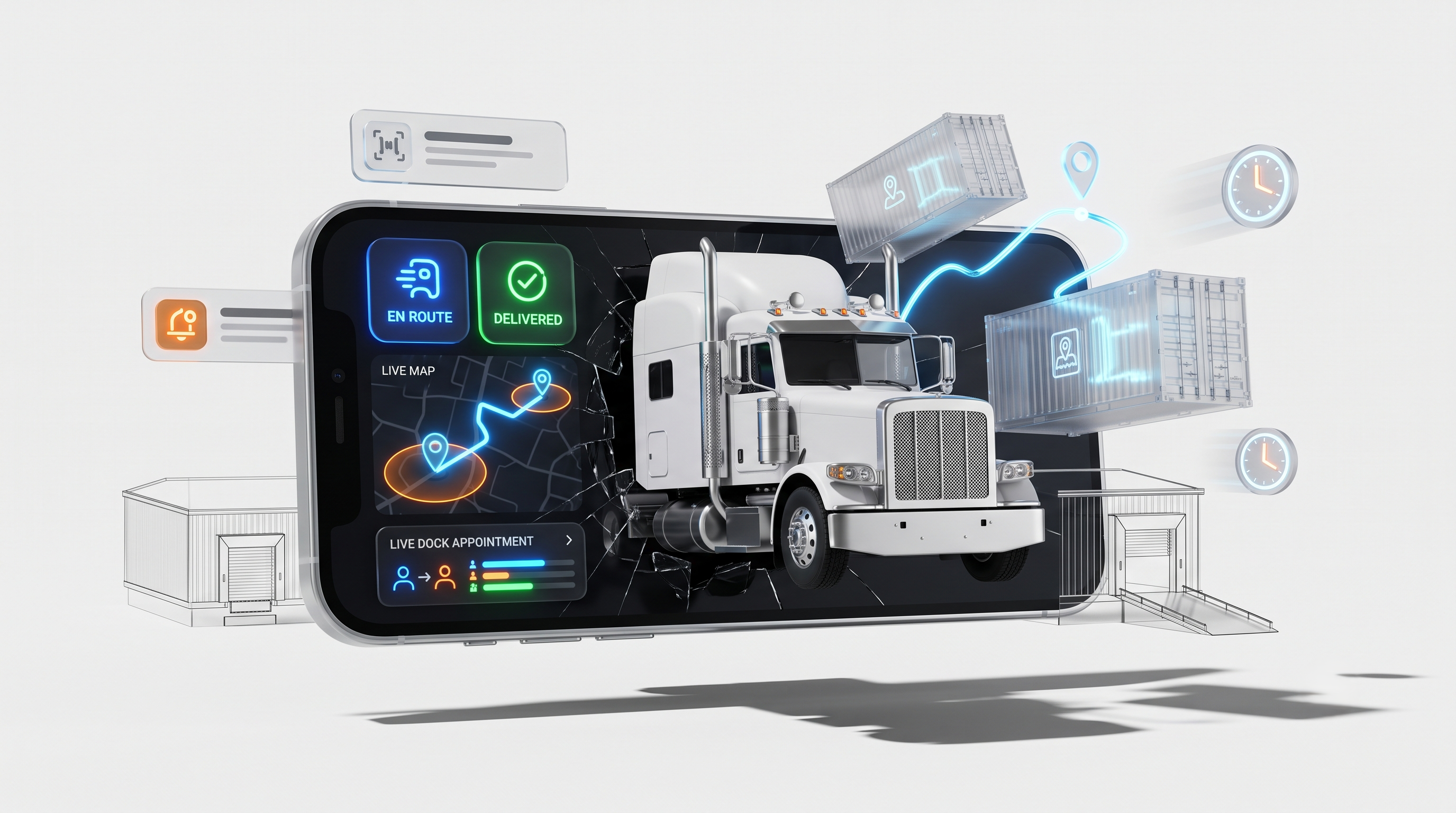
A driver sits at a live-unload dock in Bentonville, Arkansas at 3:47 AM. He's been there for two hours already, waiting for a lumper to finish stripping his trailer. His dispatch app freezes on a status update screen with fourteen mandatory fields, half of which auto-populate wrong because the backend integration hiccupped overnight. He can't mark himself "at dock." He can't request the next appointment. So he does what drivers have done for thirty years: he calls his dispatcher on his personal cell phone and reads off numbers from a paper BOL.
That's not a technology failure. That's a design failure. And it's costing your fleet real money, right now, while you're reading this.
Everyone in this industry loves to blame "driver adoption" when a mobile app flops. Drivers are old-fashioned, drivers hate change, drivers won't learn new systems. That narrative is convenient and it's also lazy. In fifteen years of watching carriers roll out software, I have never once seen a driver refuse to use a tool that actually made their day easier. What I've seen constantly is office-built software forced onto a windshield-sized screen, designed by people who have never sat in a cab during a Chicago snowstorm trying to tap a dropdown menu with gloves on.
The "Why Now" Factor: Margins Are Too Thin to Eat Bad UX
Here's the thing. Five years ago, a clunky driver app was an annoyance you could absorb. Freight rates covered the inefficiency. That cushion is gone. Spot rates have been squeezed for two straight years, driver turnover at large truckload carriers still hovers near 90% annually according to ATA data, and every wasted minute at a dock now shows up directly on your P&L instead of getting buried in fat margins.
Add to that the fact that shippers, especially the big-box retailers, are demanding real-time visibility they simply didn't ask for a decade ago. Your Fleet Management Software Development stack is only as good as the weakest link, and right now, that weakest link is almost always the driver-facing mobile interface. Dispatchers get gorgeous dashboards. Drivers get a form that looks like a 2011 government website. That imbalance is where the money leaks out.
The Bentonville Dock, 3 AM, and a Frozen App
Let's get specific, because vague industry talk doesn't help anyone make a decision. Picture a 340-truck dry van carrier running dedicated lanes between Joplin, Missouri and Dallas, with secondary lanes up to Chicago. Their core TMS is built on McLeod Software, integrated with a shipper-side SAP portal for appointment scheduling. Three years ago, they contracted an offshore dev shop to build a driver mobile app on a fixed budget, with zero in-cab user testing. Nobody rode with a driver for even a single shift before shipping version 1.0.
The app requires a live session token that refreshes every 20 minutes. Fine in an office with stable WiFi. Brutal in a dock queue with one bar of LTE. When the token expires mid-check-in, the driver's status update silently fails. The app shows "sent." The TMS shows nothing. Dispatch thinks the truck is still in transit. The Walmart DC's SAP-based yard management system doesn't get the "arrived" ping, so the driver's appointment slot effectively evaporates while he's sitting in the exact parking spot he's supposed to be in.
Here's what that actually costs, per occurrence, once you stop rounding it down to "just a glitch."
Cost Driver | Financial Impact |
|---|---|
Extra detention time beyond free hours (2.5 hrs at $75/hr) | $187.50 per load |
Missed next-appointment chargeback from retailer DC | $500 per incident |
OTIF penalty exposure across recurring incidents | Up to 3% OTIF drop fleet-wide |
Quarterly chargeback accumulation across affected lanes | $12,000 to $15,000 |
Driver replacement cost after frustration-driven turnover | $8,000 to $12,000 per driver |
That 3% OTIF drop isn't just a scorecard number your ops team frowns at in a Monday meeting. For a carrier under a routing guide agreement with a major retailer, a sustained OTIF decline triggers automatic tiered penalties and, eventually, freight reallocation to a competitor. You don't lose the lane in one bad week. You lose it in twelve small, invisible failures like this one, compounding quietly until the scorecard makes the decision for you.
Stop Adding Features. Start Removing Them.
Now here's where I'm going to say something that contradicts almost every "digital transformation" article you've read this year. Most consultants will tell you drivers need more visibility: live load boards, detailed route analytics, richer communication tools baked into the app. I think that's backwards, and I'll die on this hill.
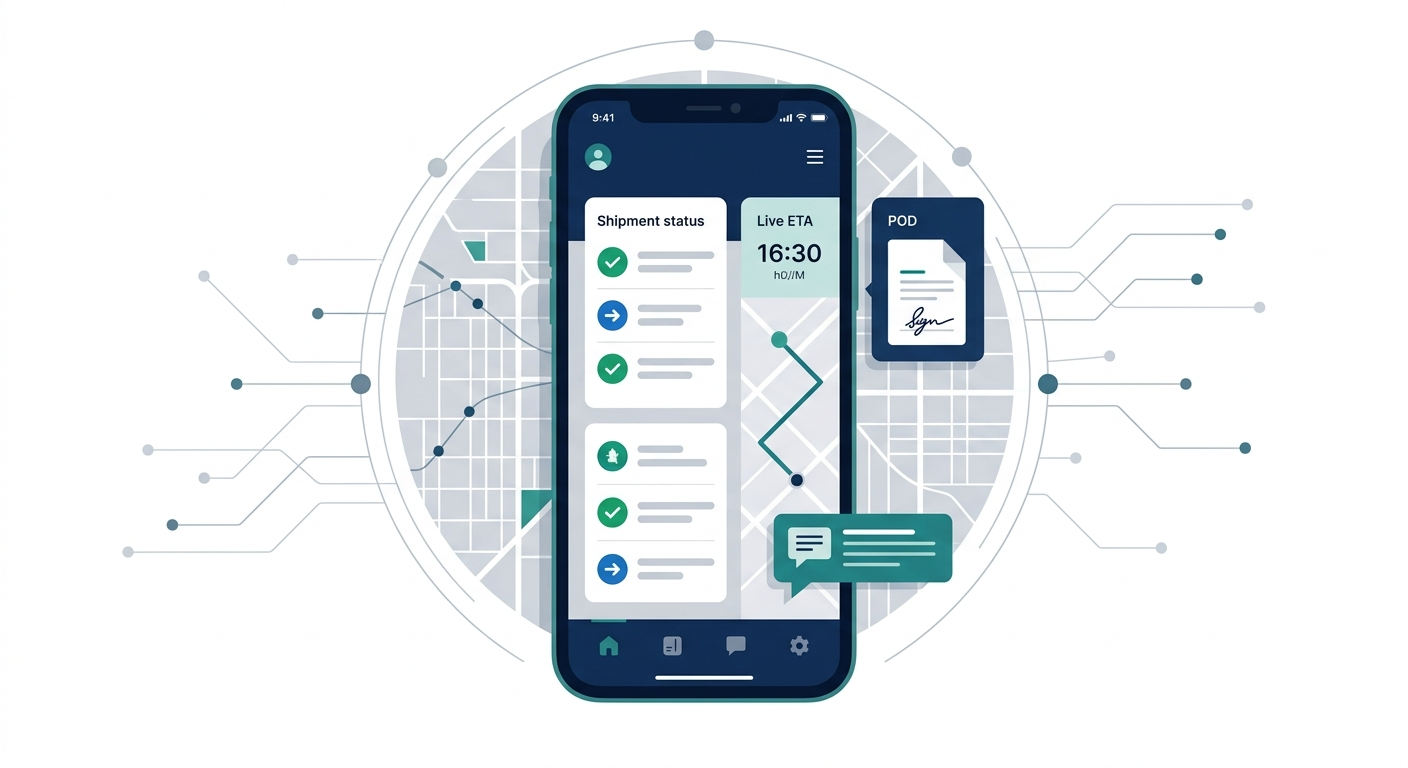
The single biggest predictor of driver adoption isn't feature richness. It's tap count. Every additional screen, every extra field, every dropdown menu is a tax on a person who is often tired, occasionally in a hurry, and sometimes wearing gloves in sub-zero temperatures. The carriers I've seen succeed with mobile rollouts didn't add functionality. They ruthlessly cut it. One client stripped a 12-screen check-in flow down to a single screen with three large buttons: Arrived, Loading, Departed. Compliance data still flowed through in the background. Adoption went from 61% to 94% in under two months, with zero additional driver training.
That's the counter-intuitive part nobody wants to hear because it sounds too simple to justify a big software budget. But simplicity is the hard part. Anyone can bolt on more fields. Figuring out which fourteen fields can be deleted without breaking compliance or billing takes real engineering discipline.
The Driver-First UI Framework: What Actually Works
If you're serious about fixing this instead of just complaining about "driver resistance" in your next ops meeting, here's the operational sequence that consistently moves the needle. This isn't theory. This is the order of operations I've watched work across multiple Trucking Software Development engagements.
Ride along with at least five drivers across different demographics, routes, and cab setups before writing a single line of UI code, because your product team's assumptions about screen glare, glove use, and connectivity are almost always wrong.
Build offline-first, meaning every action a driver takes gets queued locally and synced the moment connectivity returns, so a dead zone in rural Oklahoma never turns into a lost status update or a phantom detention clock.
Enforce a hard three-tap rule for any routine status change, and if a workflow needs a fourth tap, that's a signal the workflow needs redesigning, not more driver training.
Design for sunlight and gloves first, meaning high-contrast color schemes, large tap targets no smaller than 48 pixels, and voice-command fallbacks for hands-free updates during pre-trip inspections.
Integrate the mobile front end directly with your backend TMS and any shipper-side WMS or yard management system in real time, because a beautiful app that desyncs from your Truck Dispatch Software Development platform is worse than no app at all, since it creates false confidence in bad data.
Pilot with your most vocal skeptics first, not your tech-friendly drivers, because if a 24-year veteran who hates change adopts it without complaint, your rollout will survive contact with the full fleet.
Notice what's missing from that list: gamification badges, social feeds, dashboard analytics for drivers who just want to get home. Save the fancy stuff for the office staff. Drivers want speed and reliability, not a video game.
The "We Already Have an ELD App" Objection, and Why It's Wrong
I know exactly what a skeptical ops director is thinking right now. "We're already ELD compliant, we already spent six figures on a mobile solution, why would we spend more on UI polish?"
Fair question, and it deserves a direct answer instead of a sales pitch. ELD compliance apps exist to satisfy FMCSA hours-of-service rules. That's their entire design mandate. Nobody built them to reduce detention time, prevent appointment desync with your yard management system, or lower driver churn. Compliance and usability are two completely different design problems, and treating them as the same project is exactly why so many carriers end up with a legally sound app that drivers quietly route around using their personal phones and paper backups.
Fixing this isn't about ripping out your ELD provider. It's about layering a proper driver-first interface on top of, or in front of, the compliance layer, often through Legacy Application Modernization Services that connect your existing McLeod, TMW, or Oracle Transportation Management backbone to a cleaner mobile front end without a rip-and-replace project that would terrify any CFO. You keep your compliance data intact. You fix the part that's actually bleeding money.
Frequently Asked Questions
Isn't rebuilding our driver app just going to create another six-month IT project we can't afford right now?
No, and that assumption is exactly what keeps carriers stuck with broken tools for years. A properly scoped mobile-first redesign doesn't touch your core TMS or compliance backbone at all. Through Mobile App Consulting Services, you can scope a focused MVP that addresses the top three friction points, usually status updates, detention tracking, and appointment sync, in eight to twelve weeks, then expand from there based on real driver feedback instead of guesswork.
How do we actually prove ROI on a UI redesign to our CFO instead of just calling it a "nice to have"?
You prove it with the same detention and chargeback data you're already collecting and probably ignoring. Pull your last two quarters of detention fees, missed appointment penalties, and driver turnover costs tied specifically to app-related friction, then benchmark that against the cost of a targeted Mobile-First Design Services engagement. In almost every case I've reviewed, the redesign pays for itself within one to two quarters purely from reduced detention exposure and fewer chargebacks, before you even factor in retention savings.
Our drivers are older and genuinely resistant to new technology, so won't they just reject a new app no matter how good it is?
This is the objection I hear most often, and it rarely holds up once you actually test it. Older drivers aren't rejecting technology, they're rejecting bad technology, and there's a real difference. A driver who's been running routes for twenty years has zero patience for a fourteen-field form that crashes at a dock, but that same driver will adopt a three-button interface almost immediately because it respects his time. Pilot any new interface with your most skeptical, longest-tenured drivers first. If it survives that group, it will survive your entire fleet.
Ready to Stop Losing Money to a Frozen Screen?
If any part of that Bentonville scenario sounded uncomfortably familiar, you already know this isn't a training problem, it's a design problem. The fix doesn't require a full platform overhaul or a six-figure gamble. It starts with a focused conversation about where your drivers are actually losing time in the field. Reach out for a no-obligation consultation, walk us through your current dispatch workflow, and we'll show you exactly where the friction is hiding and what a driver-first fix would realistically cost and take to build.